
How to Play
A three-column scoring variant of Gin Rummy in which each hand you win is recorded in progressively more of your three simultaneous games, so early wins open new columns and later wins can score across all three at once.
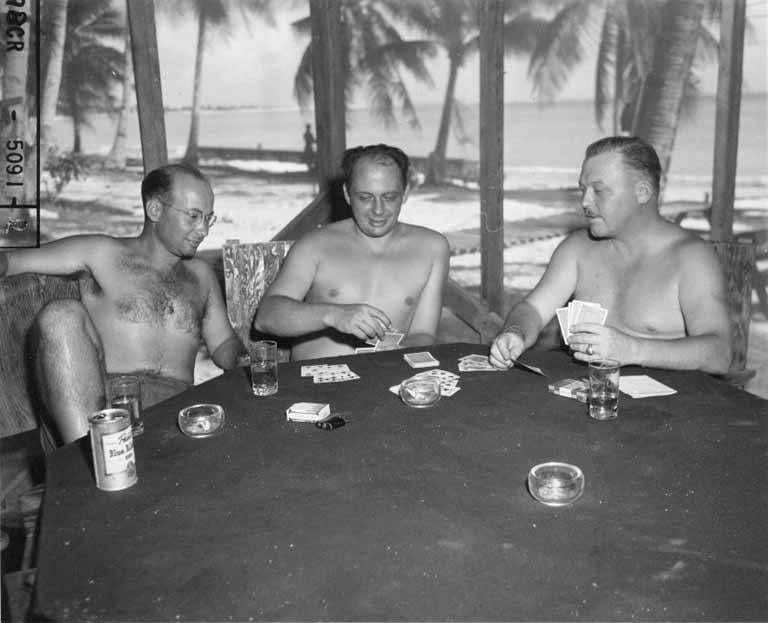
Hollywood Gin is a scoring variant of Gin Rummy that runs three separate games at once on a single scoresheet instead of just one. Every hand is dealt and played exactly like standard Gin Rummy: each of the 2 players receives 10 cards from a shuffled 52-card pack, the 21st card starts the discard pile, and players draw and discard in turn to build melds (sets and runs) while trying to knock (end the hand by laying down a low-deadwood hand) with 10 or fewer deadwood points or go Gin with none at all. What changes is only how a won hand is recorded. Each player's scoresheet has three columns, labeled Game 1, Game 2, and Game 3, and a column only starts collecting points for a player once that player has won a hand to open it. The first hand a player wins scores in Game 1 alone; the second hand that same player wins scores in both Game 1 and Game 2; the third hand, and every hand after it, scores in all three games simultaneously. Because each of the three games still finishes independently at 100 points, a player who falls behind in one column can keep fighting in the other two, and the match usually runs longer and swings more dramatically than a single game of Gin. The format took its name from its popularity among film-industry cast and crew killing time between takes on Hollywood sets in the 1930s and 1940s.
Quick Reference
- 2 players, standard 52-card deck; deal 10 cards each exactly as in ordinary Gin Rummy.
- Draw a scoresheet with three columns per player, labeled Game 1, Game 2, and Game 3.
- Play and score each hand using normal Gin Rummy rules (knock, Gin, undercut, lay off).
- Draw one card from the stock or discard pile, then discard one card to end your turn.
- Knock once your deadwood is 10 points or fewer, or go Gin with zero deadwood.
- After a knock, the opponent lays off spare cards onto the knocker's melds before deadwood is compared.
- Your first win of the match posts only to Game 1; your second win posts to Game 1 and Game 2; your third win onward posts to all three columns.
- Each column is won independently once it reaches 100 points, exactly as in a single game of Gin Rummy.
- The match is won by whoever wins more of the three columns (2 out of 3), not by the single highest point total.
Players
2 players, exactly as in standard Gin Rummy; Hollywood scoring is built around a two-player scoresheet and is not normally extended to partnerships or cutthroat play. A single hand plays in 5 to 15 minutes, the same as ordinary Gin, but because three separate 100-point games run concurrently, a full Hollywood match typically takes 2 to 4 times as long as a single game of Gin Rummy to finish. Determine the first dealer by a cut of the deck (low card deals); after that, the loser of each hand deals the next.
Card Deck
- One standard 52-card French-suited pack. No jokers.
- Card values for scoring deadwood: Ace = 1, 2 through 10 = face value, Jack/Queen/King = 10 each.
- Rank order for runs: A, 2, 3, 4, 5, 6, 7, 8, 9, 10, J, Q, K. Aces are LOW only; a run cannot wrap from King to Ace.
- Suits carry no ranking. They matter only for forming a run (same suit, consecutive ranks) or a set (same rank, different suits).
Objective
Win individual hands of Gin Rummy by the normal rules, by knocking with 10 or fewer deadwood points or going Gin with zero deadwood, but aim your wins at completing all three scoresheet columns rather than a single running total. Because a won hand's points can land in one, two, or all three games depending on how many hands you have already won, the deeper objective is to string together wins early so that later hands pay out across multiple columns at once. The match is decided once all three games have each independently reached 100 points.
Setup and Deal
- Draw a scoresheet (or use paper) with two players' names as row headers and three column headers, Game 1, Game 2, and Game 3, under each name.
- Shuffle the full 52-card deck and deal 10 cards to each player, one at a time, alternating starting with the non-dealer.
- Place the next card face up beside the deck to start the discard pile; stack the remaining 31 cards face down as the stock.
- The non-dealer has the first option to take the face-up upcard or pass; if they pass, the dealer may take it, and if the dealer also passes, the non-dealer draws blind from the stock to begin normal turns.
Gameplay
- Draw: On your turn, take either the top card of the discard pile or the top card of the face-down stock.
- Meld mentally: Arrange your 10 cards (11 while deciding what to discard) into sets (3 or 4 of a rank, mixed suits) and runs (3 or more consecutive cards, same suit); any card not in a meld counts as deadwood at its point value.
- Discard: End your turn by placing one card face up on the discard pile, returning to 10 cards in hand.
- Knock: If your unmelded deadwood totals 10 points or fewer after discarding, you may instead knock by laying your hand face up, sorted into melds, with the discard placed face down. Going out with zero deadwood is 'going Gin'.
- Opponent lays off: After a knock (but not after Gin), the opponent exposes their own melds and may add any of their unmelded cards onto the knocker's exposed sets and runs, reducing their own deadwood before it is counted.
- Stock runs low: If only 2 cards remain in the stock and no one has knocked, the hand is a draw called a 'wall'; no score is recorded for either column and the same dealer deals again.
Hand Scoring
- Knock (not undercut): The knocker scores the difference between the opponent's deadwood and their own deadwood.
- Gin: The knocker's deadwood is zero, so they score their opponent's full deadwood total plus a 25-point Gin bonus; the opponent may not lay off on a Gin hand.
- Undercut: If the opponent's deadwood, after laying off, is equal to or lower than the knocker's (including an exact tie), the opponent scores the difference plus a 25-point undercut bonus, even though they did not knock.
- Box bonus: Each hand won (by knock, Gin, or undercut) is also worth 1 box; many groups add box bonuses (commonly 25 points per box) once a game finishes to reward whoever won more hands within it.
Hollywood Column Scoring
- A column opens the moment a player first wins a hand. The very first hand any player wins is entered only in that player's Game 1 column.
- Each player's own win count decides which of their columns are active, independently of the opponent. Your second win posts its points into both your Game 1 and Game 2 columns at once; your third win, and every win after it, posts into Game 1, Game 2, and Game 3 simultaneously.
- Both players' hand scores keep landing in whichever of the winner's columns are still open, which is why later hands in a Hollywood match are worth far more on the scoresheet than the very first few.
- When one of a player's three columns independently reaches 100 points, that single column is finished and closed off, while the player's remaining open columns keep collecting points from future wins exactly as before.
- Once all three games for both players have finished, the match ends. The overall match winner is usually taken to be whoever won more of the three individual games (2 out of 3), rather than whoever has the single highest column total.
Winning
A single game within the Hollywood match is won by whichever player's Game 1, Game 2, or Game 3 column first reaches 100 points; that game bonus, plus box bonuses for hands won, is settled for that column exactly as in standard Gin Rummy. The overall Hollywood match is won by the player who wins the majority of the three games, so finishing 2 games to 1 decides the match even if the losing player's single highest column total is larger. Groups that prefer a shorter session sometimes stop after any one game finishes and simply compare running totals across all three columns instead.
Variations
- Oklahoma Gin: Uses a single running score, not three columns, but sets the knock limit for each hand from the value of the discard-pile upcard rather than fixing it at 10; a spade upcard, such as , doubles that hand's score.
- Straight Gin: Removes knocking entirely; a player may only end a hand by going Gin with zero deadwood, which sharply raises the average hand length.
- Partnership Gin: Four players form two fixed partnerships; partners' hand scores are combined, and Hollywood-style multi-column scoresheets can be layered on top of the partnership format as well.
- Chicago and Manhattan Gin: Regional American names for minor scoring tweaks, such as adjusted Gin or undercut bonus amounts, applied on top of an otherwise standard Gin Rummy base.
Tips and Strategy
- Push for early wins even with modest hands, since your first two wins only feed one or two columns; banking a Game 1 win cheaply sets up much larger multi-column payouts once your third win arrives.
- Track which of your opponent's columns are already open, not just the running totals, since an opponent on their third-or-later win is scoring into all three games at once and a single big Gin from them can swing the match sharply.
- Weigh whether to knock early versus wait for Gin based on the column situation. If your opponent has more open columns than you, taking a smaller, safer knock win to open your own remaining columns is often worth more than gambling for Gin.
- Watch closed columns as the match matures. Once one of your columns hits 100 and closes, every future win of yours pays out into fewer columns than before, so recalculate the value of contesting close hands as columns finish.
- Defense matters more than in single-game Gin, since an undercut not only wins the hand's point difference but can also determine which columns finish first; do not assume a low deadwood count is safe to discard toward if it lets your opponent undercut into an open column.
Tips & Strategy
Bank cheap early wins to open your Game 1 and Game 2 columns as fast as possible, since your third win onward pays into all three columns at once; track how many hands your opponent has already won so you know how many of their columns are live before deciding whether to gamble for Gin or take a safer knock.
The column-opening rule means the value of a won hand is not fixed the way it is in single-game Gin; the same 10-point knock can be worth one, two, or three times as many scoresheet entries depending purely on how many hands that player has already won. Strong Hollywood players treat their own early wins as investments that unlock larger future payouts rather than judging each hand purely on its immediate point value, and they weigh defensive discards against how many of the opponent's columns are currently open rather than only against the current hand's deadwood count.
Trivia & Fun Facts
Because a column only starts scoring once a player wins a hand to open it, the very first hand of a Hollywood match is worth the least it will ever be worth, while a hand won late in the match, once a player has three open columns, can single-handedly swing all three games at once. Some historical accounts describe 1930s and 1940s Hollywood card games running with much higher stakes than a home game of ordinary Gin Rummy specifically because the triple-column format multiplied how much a single lucky Gin could be worth. A player can win the overall Hollywood match 2 games to 1 while actually trailing their opponent on total points across all three columns combined, since the match winner is decided by games won, not by the grand point total.
-
01In Hollywood Gin, which of your three scoresheet columns does your very first won hand get recorded in?Answer Only Game 1; a column only starts receiving points once you have won a hand to open it, so your first win posts to Game 1 alone.
-
02How many of your three columns does your third won hand (and every win after it) score into?Answer All three columns at once, Game 1, Game 2, and Game 3, since by your third win all three of your columns have already been opened.
History & Culture
Hollywood Gin takes its name from its popularity among actors, directors, and crew on American film studio lots during the 1930s and 1940s, when standard Gin Rummy itself had already become a favorite way to pass time between takes. The three-column scoresheet was devised to stretch a single sitting into a longer, higher-stakes contest without changing anything about how individual hands of Gin Rummy are played, which let the same card-savvy Hollywood crowd that popularized ordinary Gin turn it into a more substantial betting format.
Hollywood Gin preserves a specific slice of American card-playing history, the studio-lot card games of golden-age Hollywood, inside a scoring format that is still played today whenever a two-player Gin Rummy session wants to run longer or carry higher stakes than a single game allows. It remains one of the best-known named scoring variants in the Gin Rummy family, taught alongside Oklahoma Gin and Straight Gin in most general references on the game, and it is often the first format experienced Gin players introduce to newcomers who want a longer, more eventful match than a single 100-point game provides.
Variations & House Rules
Oklahoma Gin keeps a single running score but ties the knock limit to the discard pile's upcard instead of a fixed 10 points, with a spade upcard doubling the hand's value. Straight Gin removes knocking altogether, forcing every hand to end in a Gin. Partnership Gin extends the base game to four players in two fixed teams, and Hollywood-style three-column scoresheets are sometimes layered onto that partnership format as well. Chicago and Manhattan Gin are regional American names for otherwise minor bonus-value tweaks on the standard Gin Rummy scoring table.
New groups can start with two columns instead of three to shorten the learning curve and the match length before moving up to the full three-column format. Lowering the game target from 100 to 75 points per column keeps a three-column Hollywood match closer in length to a single ordinary game of Gin Rummy, which helps players get comfortable with the column-opening rule without committing to a very long session. Some tables also agree in advance to end the match the moment any one column finishes, comparing running totals across all three columns instead of playing out the full 2-of-3 games structure.


