
How to Play
A quick addition card game. Play cards to a running total that must stay at 98 or below. Run out of safe cards and you are eliminated.
Ninety-Eight is a light but tense addition card game in which players take turns playing a card to a shared pile while keeping a running total at or below 98. Each play adds its card's value to the total, and certain cards have special effects that send the total up, down, or directly to the danger zone at 98. The first player who cannot play a legal card without pushing the total over 98 is eliminated. Play continues until one player remains. It is a close cousin of Ninety-Nine and is beloved as a quick pub or family filler game.
Quick Reference
- 2-5 players, standard 52-card deck, 4 cards each.
- Running total starts at 0; draw pile in centre.
- Play one card, add its value to the total, announce the new total.
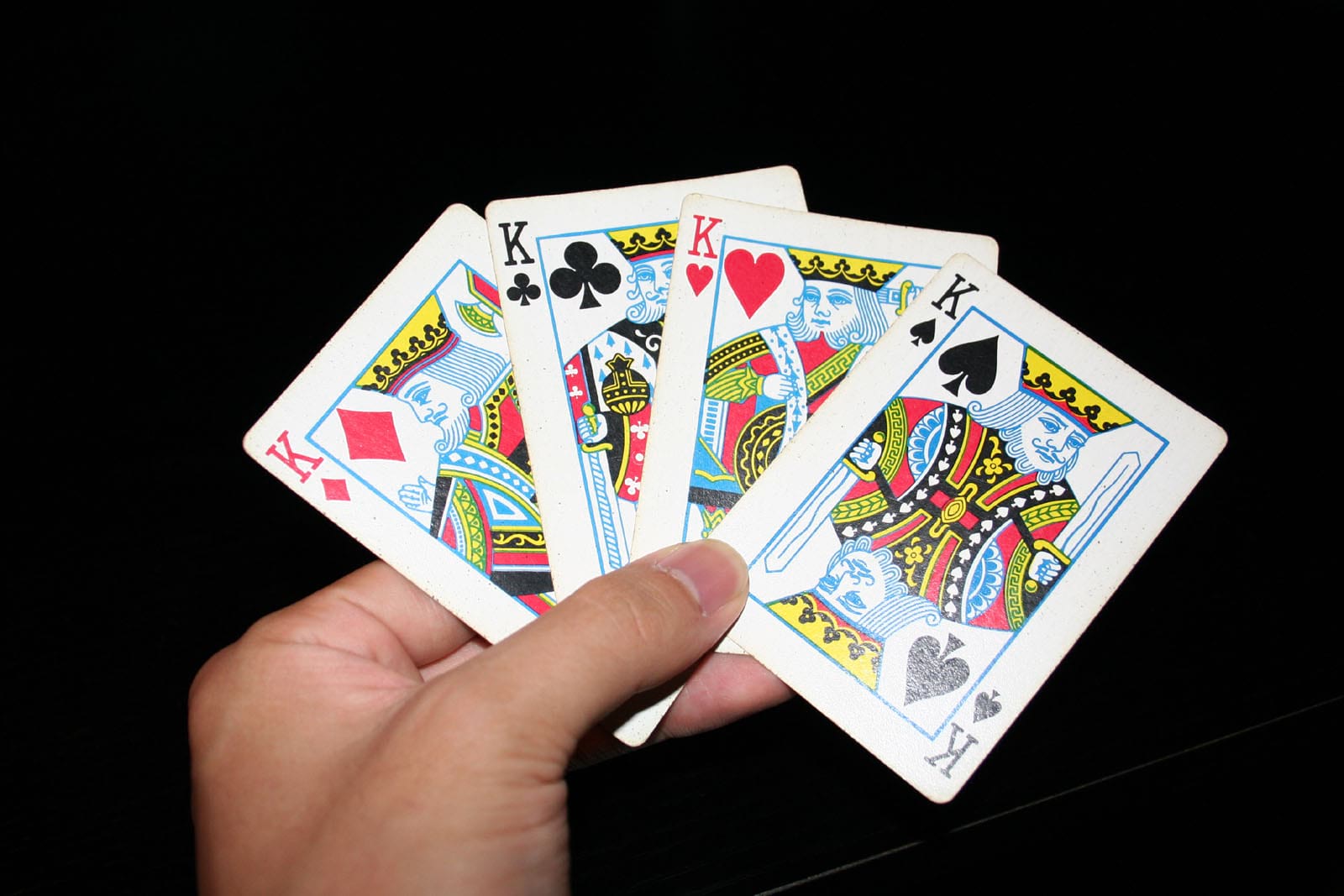
- Specials: 10 = +/-10; J/Q = +10; K = set total to 98; A = +1 or +11.
- Draw one to refill to 4. Eliminated if you cannot play legally.
- Round: last player standing wins.
- Match: 3 strikes and you are out; last survivor wins the match.
Players
Ninety-Eight plays well with 2 to 5 players. With 3 or 4 players the pacing is ideal. With 2 players the duel is short; with more than 5 add a second deck or reduce each hand size to 3.
Card Deck
Use a standard 52-card French-suited deck. No Jokers. Card values: Ace = 1 or 11 (player's choice on play), 2 through 9 = face value, 10 = +10 or -10 (player's choice), Jack and Queen = +10, King = sets the total to 98 regardless of current value.
Objective
Stay in the game by always playing a card that keeps the running total at 98 or less. Force your opponents into positions where they cannot play a legal card. Be the last player remaining after all others are eliminated.
Setup and Deal
- Agree on the elimination cap (standard: 98) and the lives per player (standard: 3 strikes before full elimination in multi-round play).
- Choose a dealer by cutting for high card. The deal rotates clockwise.
- Deal 4 cards face-down to each player, one at a time clockwise.
- Place the remaining deck face-down in the centre as the draw pile.
- Set the running total to 0.
- The player to the dealer's left plays first.
Gameplay
- On your turn, play exactly one card from your hand to a central face-up discard pile. Announce the new running total aloud.
- Card values: 2-9 add their face value. Jacks and Queens each add 10. 10s either add or subtract 10 (your choice). Aces add either 1 or 11 (your choice). Kings set the total to 98 regardless of the current total.
- Draw: After playing, draw the top card of the draw pile to refill your hand to 4 cards. When the draw pile runs out, shuffle the discard pile minus the current top card and continue.
- Elimination: If you cannot play any card from your hand without pushing the total over 98, you are eliminated from the round (or lose a life in multi-round play). Set aside your hand and continue with remaining players.
- Resetting after elimination: When a player is eliminated, the running total and discard pile reset to 0 and the next active player leads with a fresh card. The eliminated player does not replay.
- Specific rule; playing on 98: If the total is exactly 98, the next player must play a 10-subtract (to bring it to 88) or a King (which re-sets to 98 but passes the problem to the next player). Otherwise they are eliminated. Aces played as 11 do not help; they push over.
Scoring
- There are no numerical points. Losses are tracked by elimination.
- Single-round play: The last player standing wins the round. Simple.
- Multi-round (strikes): Each elimination earns a strike. A player who has accumulated 3 strikes is permanently out of the match. The final surviving player wins.
- Stake play: Each player antes a chip before the round. The winner of each round collects one chip from every eliminated player; the overall match winner collects the total stakes.
Winning
A single round is won by the last player who can still play a legal card. A match is won by the last player not fully eliminated across an agreed series of rounds or strikes. In stake play, the winner is whoever collects the most chips.
Common Variations
- Ninety-Nine: Target cap is 99 with Kings also forcing 99 and special handling for 4s (reverse direction) and 3s (skip next player). Closely related game.
- Team Ninety-Eight: Paired players share lives; eliminating one team member takes both out of contention.
- Reversal 4s: The 4 adds 0 to the total but reverses play direction.
- Skip Jacks: Jacks skip the next player instead of adding 10.
- Speed 98: Target cap reduced to 50 for a one-minute filler game.
- Five-card hands: Deal 5 cards each for more strategic options; common in two-player duels.
Tips and Strategy
- Kings are your most valuable card on a low total and your safest card on any total. Hold at least one King in reserve when you can.
- 10s are flexible because you can choose to subtract 10. Save at least one 10 for when the total creeps above 80.
- Count played Kings and 10s as you go. Once all four Kings and all four 10s are in the discard, the end is near; high-value cards become dangerous.
- Aces are flexible too, but an Ace played at 11 late in the round is often a waste. Lead Aces as 1 early and keep them as escape cards.
- When you are forced to push the total up, push to a number like 89 or 92 that leaves opponents with few safe cards. An opponent with mostly face cards cannot easily survive above 88.
- Pay attention to hand sizes. An opponent with 4 cards has more options; if you can drain them to 3 or fewer by forcing plays, you compound their chance of elimination.
Glossary
- Running total: The cumulative sum of card values played so far in the current round.
- Discard pile: The face-up stack of played cards in the centre.
- Draw pile: The face-down pile from which players refill their hand to 4 after each play.
- Elimination: Being removed from the round because you cannot play a card without exceeding 98.
- Strike: A record of elimination in multi-round play; three strikes removes a player from the match.
- Reset: After an elimination, the total and the discard pile return to 0 for the next round.
- Subtract-10 (10): The option to play a 10 as a subtraction of 10 from the running total.
- King reset: Playing a King instantly sets the running total to 98, threatening the next player.
Tips & Strategy
Hoard Kings and 10s as your emergency cards. Spend pips early while the total is safe; save your lifelines for when the total climbs into the 80s and 90s.
The deep play is counting: once all four Kings and all four 10s have passed through the discard, a player holding a hand of face cards and Aces is effectively doomed. Tracking those special cards transforms the game from guesswork to anticipation.
Trivia & Fun Facts
The game creates spectacular standoffs when the running total parks in the 90s and every remaining player is holding their breath hoping for a 10 or King to cycle through the discard reshuffle.
-
01What happens to the running total when a King is played in Ninety-Eight, regardless of the current total?Answer The total is instantly set to 98, putting the next player in immediate danger.
History & Culture
Ninety-Eight belongs to a family of adding card games popular in Europe and North America since the 19th century, closely related to Ninety-Nine and various pub stop-games that share the premise of a shared total with elimination penalties.
Ninety-Eight is a beloved pub filler and family game across Britain and North America. Alongside Ninety-Nine and Cheat, it is the card game you pull out when you have 10 minutes before dinner or between bigger games.
Variations & House Rules
Ninety-Nine shifts the cap to 99 with different special cards. Team variants pair players. Reversal 4s and Skip Jacks modify individual card powers. Speed 98 caps at 50 for quick games.
For children, drop the strikes system and simply restart after each round. For harder play, remove all 10s from the deck; the only subtracting card is gone, turning the game into a pure climb.


