
How to Play
Thirty-One is a quick card game where players draw and discard to get a hand totaling 31 in a single suit. Fast rounds and simple scoring make it perfect for groups.
Thirty-One (also Scat, Blitz, Cad-thirty-one) is a quick draw-and-discard game for 2 to 7 players with roots in 15th-century Europe. Each player keeps a three-card hand and tries to build the highest same-suit point total. A hand of exactly 31 instantly ends the round; otherwise, a player may 'knock' to end play, forcing a showdown. Lives are tracked with tokens and a player who runs out is eliminated.
Quick Reference
- Shuffle a 52-card deck; deal 3 cards each to 2-7 players and flip one card face-up to start the discard.
- Each player starts with 3 tokens as lives.
- Draw one card from stock or discard, then discard one (keep exactly 3 cards in hand).
- Or knock instead of drawing; after a knock each other player gets one final turn.
- Revealing 31 in one suit at any moment is an instant 'blitz' that ends the round; every opponent loses a token.
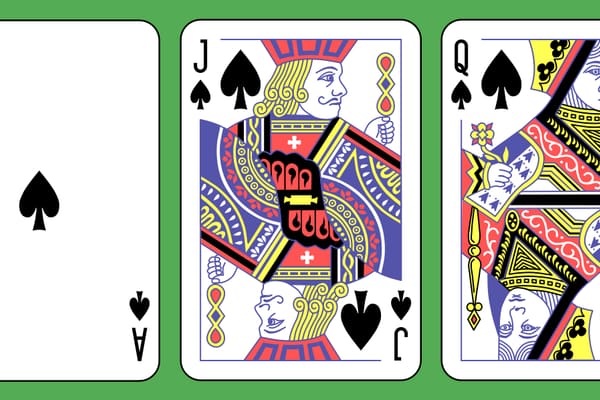
- Card values: Ace = 11, K / Q / J = 10, pip cards = face value. Only same-suit cards in your hand sum together.
- Three of a kind (any suits) = 30.5 (ranks between 30 and 31).
- Lowest showdown total loses one token; a knocker who is strictly lowest loses two. Zero tokens = eliminated.
Players
2 to 7 players, every player for themselves (no partnerships). The first dealer is chosen by any agreed method (commonly cutting for high card); the deal rotates clockwise each round.
Card Deck
One standard 52-card deck, no jokers. All four suits (clubs, diamonds, hearts, spades) are used. Card values for the same-suit total: Ace = 11, King / Queen / Jack = 10 each, 2-10 = pip value (2 = 2, 3 = 3, ..., 10 = 10). Cards of different suits do not add together; only cards of the same suit within your hand count toward the total.
Objective
Hold three cards in the same suit totalling as close to 31 as possible. 31 is an instant win; otherwise knock when you think your total will beat the other players at the showdown. Survive elimination by not repeatedly holding the lowest hand.
Setup and Deal
- Each player starts with 3 tokens (pennies, chips, or matchsticks) beside them; these are 'lives'.
- Shuffle the 52-card deck; the dealer offers a cut to the player on the right.
- Deal 3 cards face-down to each player, one at a time clockwise.
- Turn the next card face-up beside the stock to start the discard pile.
- Play begins with the player to the dealer's left.
Gameplay
- Turn (draw-and-discard): On your turn, draw one card from either the face-down stock or the face-up discard pile, then discard one card face-up to the discard pile. Your hand stays at exactly 3 cards at all times.
- Knocking: Instead of drawing, you may knock on the table. Knocking ends your turn without drawing or discarding; after a knock every other player (going clockwise) gets exactly one final turn (draw and discard, or stand), and then the round ends with a showdown. You cannot knock on your very first turn (after the deal) in most houses.
- 31 instant win: If at any moment in the round before a knock a player's 3 cards are all of one suit and total exactly 31 (Ace + 10-value + 10-value), they immediately reveal their hand. 31 is a 'blitz'; every other player loses one token at once and the round ends.
- Scoring the hand: At the showdown each player totals their highest single-suit value: two or three same-suit cards sum together, cards of a different suit do not contribute. Three of a kind (three cards of the same rank, any suits) counts as a fixed 30.5 points, ranking between 30 and 31.
- Illegal play: Drawing two cards or failing to discard is illegal; if noticed before the next player acts, correct the mistake; otherwise the round is void.
- End of round: The round ends on a knock (with the final round of turns completed), on a 31 blitz, or if the stock runs out and someone knocks or passes.
Scoring and Elimination
- Losing lives: The player with the lowest same-suit total at the showdown loses one token (a 'life'). Ties for lowest each lose a token.
- Knocker-ties-low: If the player who knocked ties for the lowest score, they are safe and the other low-score player loses a token.
- Knocker fails: If the knocker's total is strictly lowest (beaten by at least one opponent), they lose two tokens as a penalty for an ill-timed knock.
- 31 blitz: Every other player loses one token regardless of their own hand.
- Out of lives: A player who loses their third token is 'on the county' and survives one more round; losing again eliminates them permanently from the game.
Winning
- Match winner: The last player still holding at least one token wins the match.
- Tie-breakers: If two players run out of tokens simultaneously in the same round, they play a tie-break deal between just those two; lowest at showdown loses.
Common Variations
- Scat: Same game under the North American name; rules identical.
- Blitz: In some groups this name refers specifically to the 31 instant-win rule (the 'blitz').
- Buy-in: A player who loses all their tokens may pay a small stake to re-enter with a full life count; useful for long pub sessions.
- On the bus: After reaching zero tokens, a player survives one additional round as 'on the bus'; the next life lost is elimination.
- Four-card Scat: Deal 4 cards each for larger hands; maximum rises to 41 in one suit.
- No three-of-a-kind bonus: Drop the 30.5 rule so only same-suit totals count; simpler scoring.
Tips and Strategy
- Commit to one suit early rather than splitting between two; three 10-value same-suit cards give you 30, which beats most unconverted hands.
- Watch the discard pile carefully: if an opponent picks up a high card of a suit, they are probably building that suit; switch away or pressure them with a quick knock.
- Knock at 28+ in most hands; against cautious players a 26 is often enough, while against aggressive discarders you may need 29+.
- Do not chase a 31. Three 10-value cards (30) or an Ace-plus-two-faces (31) are both winning hands; do not discard a useful card hoping for the elusive final ace.
- As you near elimination (one life left), play defensively; knock earlier and accept smaller wins rather than hunt for big ones.
Glossary
- Knock: The action of ending a round instead of drawing; all other players get one final turn and then a showdown decides the round.
- Blitz / 31: A hand of exactly 31 points in one suit (Ace + 10 + 10-value in the same suit); ends the round immediately with every opponent losing a token.
- Token / life: A chip or coin representing a player's remaining resilience; three starting tokens, elimination on zero (plus one 'on the bus' grace round in some variants).
- Three of a kind: Three cards of the same rank (any suits); counts as 30.5 points, sitting between 30 and 31 for ranking purposes.
- On the county / on the bus: A player down to zero tokens who has one more grace round before elimination.
- Showdown: The reveal phase after a knock, where all players show hands and the lowest loses a token.
Tips & Strategy
Commit to one suit early; three 10-value same-suit cards give you 30 points, which beats most unconverted hands. Knock at 28 or more; a knocker who ties for lowest is safe, but a knocker who is strictly lowest loses two tokens instead of one.
Knowing when to knock is the most important skill. A hand of 28+ is usually safe; against cautious opponents 26 is often enough. Always remember that a failed knock costs two tokens, not one, so never knock with a truly weak hand.
Trivia & Fun Facts
Three Aces same-suit would total 33, which is impossible because a suit has only one Ace. The theoretical maximum is therefore exactly 31 (Ace + 10-value + 10-value in the same suit); a hand of 31 is called a blitz and immediately ends the round.
-
01How many points is an Ace worth in a same-suit Thirty-One hand?Answer 11 points; together with two 10-value cards (10, Jack, Queen, or King) of the same suit it reaches the maximum hand of 31.
History & Culture
Thirty-One dates back to at least the 15th century and has been played across Europe in various forms since; it is one of the oldest card games still widely played today, with an unbroken tradition from medieval Spain and Italy through modern European and American pub play.
A staple at European and North American pubs, family gatherings, and casual game nights; its 500-year continuous lineage places it alongside Hombre and Piquet among the oldest surviving card games in the Western tradition.
Variations & House Rules
Scat (North America) and Blitz share the core rules with minor naming differences. On-the-bus rules grant one grace round after losing all three tokens. Buy-in allows eliminated players to pay a stake to re-enter. Four-card Scat deals 4 cards each and raises the maximum to 41 in one suit.
Increase starting tokens to 5 for longer sessions, or enable buy-back for pub games where eliminated players want to keep playing. House rules often add 3-of-a-kind bonuses or a first-turn-knock restriction.


