
How to Play
A complex Swedish three-hander of the Solo-Whist family famous for roughly forty bid contracts, a 13-card talon purchase, and chip payments in betar and pinnar.
Vira is a three-player Swedish trick-taking game in the Solo-Whist family, famous for having roughly forty distinct contracts and for being considered Sweden's most elaborate traditional card game. Each of the three players is dealt thirteen cards; the remaining thirteen cards form a face-down talon in the centre. Players bid in a strict ranking of contracts that differ in trump choice, target tricks (to win or to lose), and whether the bidder may buy cards from the talon. The winning bidder becomes the declarer and plays alone against the other two. Payments are settled in chips (called betar and pinnar, eight pinnar to one bet) with chips flowing into or out of a shared pool depending on the contract's size and success.
Quick Reference
- 3 active players (4th sits out and rotates).
- 52-card deck, dealt 13 each; 13 form the face-down talon.
- Ante 1 pinne each to the pool.
- Bid a contract from the ladder or pass (passes are final).
- High bidder performs the purchase from the talon per contract rules.
- Forehand leads; follow suit if possible; highest trump or led suit wins.
- Misär contracts invert the objective (lose every trick).
- Each contract's tariff pays betar and pinnar into or out of the pool.
- Per-trick differences pay pinnar between declarer and opponents, doubled for red trumps.
- Session winner has the most chips when the pool is settled.
Players
Exactly three active players per deal. Four-handed tables are common socially: the dealer sits out while the other three play, and the deal rotates so everyone plays three deals in four.
Card Deck
- One standard 52-card deck, no jokers.
- Ranks high to low: A, K, Q, J, 10, 9, 8, 7, 6, 5, 4, 3, 2.
- Suits rank (for bid-comparison and tie-breaks): hearts high, then diamonds, clubs, spades low.
- Chips, called betar (bets) and pinnar (sticks), used for payment; one bet equals eight pinnar.
Objective
Win the bidding auction with a contract you can make, then as declarer either win the specified number of tricks (most contracts) or lose every trick (misär contracts). Defenders cooperate to break the declarer. Over many deals the player who gains the most chips wins.
Setup and Deal
- Everyone antes a fixed number of pinnar (commonly 1) to the pool at the start of each deal.
- Choose the first dealer by low cut; the deal rotates clockwise (or counter-clockwise in some regions) thereafter.
- The dealer shuffles and deals counter-clockwise in packets: 4 cards, then 3 cards, then 3 cards, then 3 cards to each player, so each player ends with 13 cards.
- The remaining 13 cards are set face-down in the centre as the talon (stock).
- The player to dealer's left (forehand) opens the bidding.
Bidding
- Bids are made from a fixed contract ladder; each bid must be higher than the previous. There are roughly forty named contracts.
- Common contracts, in rough ascending order of value, include Turné (turn up a talon card for trump, take 6 tricks), Vingel, Tringel, Gask (take 7 tricks with a chosen trump, exchange with part of the talon), Köpmisär (take no tricks, limited exchange), Solo (take 8+ tricks without taking any talon cards), Vira (take all 13 tricks after taking the whole talon), and Stormvira (take all 13 tricks without taking the talon).
- Players pass when unwilling to outbid. A pass is final; a player who passes may not reenter the auction.
- If all three pass without bidding, the hand is thrown in, each player antes again, and the next dealer deals.
- The high bidder becomes the declarer and names a trump suit only for contracts that require one; misär and some solo bids are played with no trumps.
The Purchase
- After the auction, the declarer may exchange cards with the talon according to the contract (this phase is called köpet, the purchase).
- Some contracts let the declarer pick up the whole 13-card talon, keep 13 cards, and discard the rest face down (Vira, large solos).
- In Gask and similar mid-level contracts, the declarer takes a fixed number of cards and the opponents may then exchange some of their own cards with the leftover talon.
- Stormvira and "pure" solo contracts forbid any exchange.
- Discarded cards are set aside and count toward the declarer's scoring pile at hand-end (useful only for tie-break thresholds in specific contracts).
Trick Play
- Forehand (the player to dealer's left) leads to the first trick.
- Each player in turn must follow suit if able; if void, they may play any card, including a trump.
- A trick is won by the highest trump played, or the highest card of the suit led if no trump is played.
- The winner of a trick leads to the next.
- In misär contracts, the objective inverts: the declarer tries to take zero tricks; winning any trick immediately ends the contract as a loss.
- Play continues until all thirteen tricks are resolved.
Scoring and Payment
- Each contract has a tariff: a fixed number of betar (bets) the declarer wins from the pool or pays to the pool on success or failure.
- Small contracts (Turné, Vingel) typically change hands by 1 to 4 pinnar; medium contracts (Gask, Solo) by multiple betar; Vira and Stormvira by many betar plus separate pinnar from each opponent.
- Unsuccessful declarers "beta": they pay their stated contract into the pool (the source of the name betar).
- For each trick above or below the contract target, the declarer exchanges additional pinnar with each opponent. The exchange rate depends on the trump colour (hearts/diamonds pay double the basic rate) and on whether exchange with the talon was allowed.
- At the end of the agreed session (a number of deals, or until the pool empties), the player with the most chips wins.
Winning
Each deal is decided individually: the declarer wins by making the contract and loses by falling short, with chips moving between the pool and each player according to the contract's tariff. The overall match is won by the player holding the most chips when the agreed number of deals has been played or when the shared pool is empty. Tied chip totals are usually broken by a single additional deal.
Common Variations
- Plansen: A simplified tariff for casual play; fewer contracts and flat chip values.
- Four-handed Vira: The dealer sits out each deal while the other three play, rotating after every hand.
- Stormvira: A contract demanding all 13 tricks without any talon exchange, worth the largest reward in the tariff.
- Gök: A misär contract played with no trumps and with the whole talon in the declarer's hand; the declarer must lose all 13 tricks.
- Short Vira: A rare 36-card version (removing 2s through 5s) used at fast tables; contracts are re-tariffed accordingly.
Tips and Strategy
- Count tricks before you bid: most playable contracts need four or five secure tricks beyond what the talon can add.
- Use the purchase phase to create a void in your weakest side suit when the contract demands trump tricks; a void almost always converts into an extra trump trick.
- As a defender, lead the declarer's weakest side suit to force trump ruffs early; once the declarer is short in trumps, misère-style holdings in the long suit cash themselves.
- Memorize only the ten most common contracts. The higher bids appear rarely and can be looked up; the lower ones decide most hands.
- Treat misär bids cautiously: a single middle card (8, 9) in a short suit is usually fatal because opponents can strip you down to it.
Glossary
- Talon: The 13 cards left face down after the deal.
- Köpet: The purchase, the phase in which the declarer (and sometimes opponents) exchange cards with the talon.
- Beta: To pay the contract's tariff into the pool after failing.
- Betar and pinnar: The two chip denominations; 1 bet = 8 pinnar.
- Vira: The contract demanding all 13 tricks after taking the whole talon; the game takes its name from this bid.
- Stormvira: All 13 tricks without taking any talon card, the highest contract in the ladder.
- Misär / Köpmisär: Contracts in which the declarer aims to lose every trick, with or without a talon purchase.
- Forehand: The player to the dealer's left, who bids first and leads to the first trick.
Tips & Strategy
Count your secure tricks before bidding, reserve high bids like Gask or Solo for hands that already have four or five tricks without the talon, and as a defender attack the declarer's trump length by leading the weakest side suit.
The most powerful tool in Vira is the talon purchase. Players who learn to discard for voids rather than for raw high-card value dramatically outperform those who simply keep their highest cards.
Trivia & Fun Facts
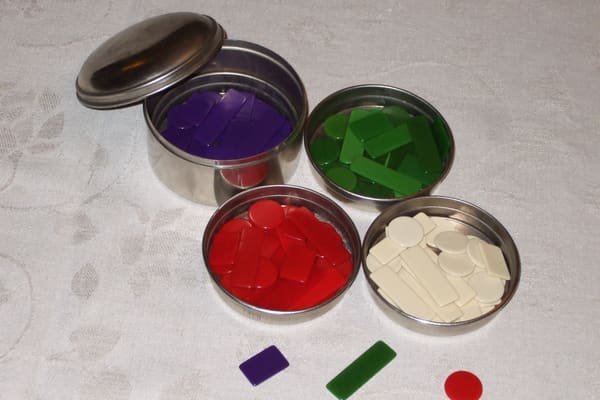
The game's chip denominations (1 bet = 8 pinnar) and the habit of paying into a shared pool (the beta) inspired Swedish slang for gambling losses. Chips were traditionally kept in specialised two-compartment cups called virapullor.
-
01Approximately how many distinct named contracts exist in standard Vira?Answer Around forty, making Vira one of the most elaborate bid ladders in any trick-taking game.
History & Culture
Vira traces to the early 19th century; tradition holds that bored court officials at Vira courthouse in Sweden invented it during a snowstorm around 1810. It flourished in Swedish salons throughout the 1800s and early 1900s before Contract Bridge pushed it into niche status, though dedicated clubs still play it today.
Vira was the card game of choice in Swedish salons and gentlemen's clubs throughout the 19th century; Dan Glimne calls it Sweden's national card game. Annual Vira tournaments are still held, often using historical virapullor chip cups.
Variations & House Rules
Plansen is a simplified tariff for newer players, four-handed Vira rotates a dealer out each deal, and Stormvira is the ladder-topping contract demanding every trick without using the talon.
For a shorter introduction, restrict the auction to Turné, Gask, Solo, and Vira, ignore the full contract list, and use a fixed one-pinne ante each deal.


