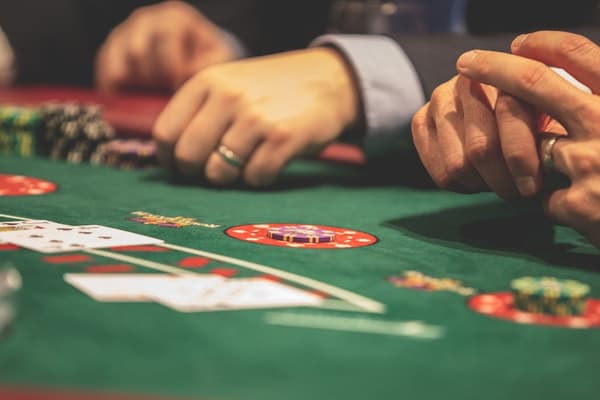
How to Play
A three-phase drinking card game: four guessing questions, a pyramid round of assigning sips with card matches and bluffing, and a final penalty bus ride where face cards reset the row.
Ride the Bus is a three-phase drinking card game played with a standard 52-card deck and lots of cheap drinks. In Phase 1, each player answers four escalating yes-or-no questions about the next card drawn and takes a sip for every wrong answer. In Phase 2, the dealer builds a face-down pyramid and flips cards one row at a time; matching a flipped card against a card in your hand lets you assign drinks to the other players, and bluffing is encouraged. In Phase 3, the player who finished Phase 2 with the most cards in hand 'rides the bus': the dealer flips a row of 4 to 10 cards, and any face card or Ace resets the row and adds a sip until the rider makes a clean pass. The whole game usually runs 20 to 40 minutes and is one of the most widely recognised drinking-card traditions in North American and British pub culture.
Quick Reference
- 3-8 players with a standard 52-card deck.
- Each player needs a drink. Pick one dealer.
- No deal at start; deck feeds all 3 phases.
- Phase 1: Red/Black (1), Higher/Lower (2), In/Out (3), Suit (4). Wrong = that many sips.
- Phase 2: Pyramid 5-4-3-2-1. Match card rank to assign sips (row value). Bluff allowed; Bullshit calls double the stakes.
- Phase 3: Most-cards rider flips a 10-card row. Face cards or Aces reset and add sips.
- No points; penalties are sips only.
- Bus reset shuffles full deck; rider starts over.
Players
Three to eight players. With two, the game is usually not worth the setup; with nine or more, Phase 2 runs dry on cards before the pyramid resolves. One player acts as dealer; the dealer does not play in Phase 1 (their hand is the deck) but does join Phase 2.
Card Deck
- One standard 52-card deck, no jokers.
- Card ranking low to high: 2, 3, 4, 5, 6, 7, 8, 9, 10, Jack, Queen, King, Ace.
- Red suits: hearts and diamonds. Black suits: spades and clubs.
- Face cards (Jack, Queen, King) and Aces are the 'punishment ranks' for the bus phase.
Objective
Avoid being the player who rides the bus at the end. You accomplish this by answering Phase 1 correctly, avoiding getting caught bluffing in Phase 2, and most importantly, ending Phase 2 with fewer cards in front of you than the other players. The last player to ride the bus and eventually survive the row ends the game.
Setup
- Every player needs an accessible drink. Traditional stakes use beer or another easy-sipping drink; non-alcoholic variants work identically.
- Choose one player as dealer. The dealer keeps the deck and manages card flips but does not play Phase 1.
- Shuffle the deck thoroughly. All cards start face down in the dealer's hand.
- No initial cards are dealt; the deck feeds every phase.
Phase 1: Four Guessing Questions
- Question 1 (Red or Black): The player guesses 'red' or 'black'. The dealer flips the top card face up in front of the player. Wrong = 1 sip. Correct = no penalty. The card stays in front of the player.
- Question 2 (Higher or Lower): The player guesses 'higher' or 'lower' relative to their first card. The dealer flips a second card. Wrong = 2 sips. Equal rank counts as wrong.
- Question 3 (Inside or Outside): The player guesses whether the next card's rank will fall strictly between (inside) or strictly outside the two cards already in front of them. Equal to either card counts as wrong. Wrong = 3 sips.
- Question 4 (Guess the Suit): The player names one of the four suits. Wrong = 4 sips.
- Each player keeps the 4 cards they drew. Proceed clockwise around the table until every non-dealer has been through the four questions.
Phase 2: The Pyramid
- After Phase 1, the dealer lays the next 15 cards (or however many the pyramid layout requires) face down in a pyramid of 5 rows: row 1 has 5 cards, row 2 has 4, row 3 has 3, row 4 has 2, row 5 has 1 card on top.
- Starting from the bottom (row 1), the dealer flips the first card face up.
- Assigning drinks: Any player who holds a card of the same rank as the flipped card may place their matching card on the flipped card and assign sips to any other player(s). Row 1 cards assign 1 sip; row 2 assigns 2 sips; row 3 assigns 3 sips; row 4 assigns 4 sips; row 5 (the top card) assigns 5 sips.
- Stacking: A player assigning sips may split the total across multiple opponents or give them all to one (for example, on a row-3 card, assign 1 sip to one opponent and 2 to another, or 3 sips to one opponent).
- Bluffing: A player may claim to have a matching card without actually holding one. The player on the receiving end may challenge with 'Bullshit!' or accept the drink. If accepted, the drink is taken and no cards are revealed. If challenged, the claimant reveals their card: if it matches, the challenger drinks DOUBLE the stated amount; if it does not match, the claimant drinks DOUBLE and everyone learns they were lying.
- Continue flipping: The dealer flips the next card in the current row until the row is exhausted, then moves up to the next row.
- End of pyramid: Phase 2 ends when the top row-5 card has been resolved. Players return unused cards to the dealer for the next phase.
Phase 3: Riding the Bus
- After Phase 2, each player counts their remaining 4 Phase-1 cards plus any that survived (unmatched) from their bluffs. The player with the most surviving cards rides the bus. Ties are broken by card-rank sum (highest total rides) or by a one-card draw (high card rides).
- The dealer reshuffles all the cards and lays a row of 10 face-down cards in front of the bus rider (traditional; 4 to 8 cards in abbreviated versions).
- Round 1: Starting from the leftmost card, the rider flips each card one at a time. Number cards (2-10) are safe. For a Jack, the rider takes 1 sip; for a Queen, 2 sips; for a King, 3 sips; for an Ace, 4 sips. Any face card or Ace resets the row: the dealer shuffles all cards back into the deck and redeals a fresh row of 10. The rider continues until they survive one full row with no face cards or Aces.
- Optional pyramid bus: Some groups use a pyramid of 10 face-down cards where the rider must clear successive ranks without hitting a penalty, or a decreasing-row bus where the row shrinks by one card after each clean flip.
- The game ends when the rider completes a clean row.
Scoring
- There are no points: Ride the Bus is scored entirely in sips of drink and who eventually rides the bus.
- Optional social scoring: the player who rides the bus the longest each evening buys the first round of the next game.
Winning
The match ends when the bus rider survives a clean row in Phase 3. There is no single 'winner' in the classical sense; the rider completes the ride and the session ends. Many groups play a best-of-three series with a new dealer each round, giving every player a chance to be the dealer who controls the pace.
Common Variations
- Give and Take Pyramid: The first two rows assign drinks as normal; the top two rows REVERSE the assignment, forcing the matching player to drink themselves. Adds tension to holding high-rank cards late into Phase 2.
- 7-card Phase 1: Add questions 5-7 (In between first and second card; Hot/cold within 3 of the previous card; Name the exact rank) for a longer first phase.
- No bluffing: Some groups disallow bluffing in Phase 2 for a faster, luckier game.
- King's Cup bus: The rider's penalty row alternates between forwards and backwards passes, adding sips on each reset.
- Mini bus: Use only 4 cards for Phase 3 for a quick conclusion suitable for casual rounds.
Tips and Strategy
- Phase 1 is mostly luck, but adjust guesses to card-counting basics: bet 'higher' on a 2-7 and 'lower' on an 8-K. With an 8 on a higher/lower call the true odds favour lower by a single card.
- Keep your Phase 1 cards spread so you remember what you have. A King you forgot about costs 5 sips you could have given to someone else.
- In Phase 2, bluff sparingly in low rows and never in row 5. Getting caught on a row-5 bluff costs 10 sips.
- Save your best matching cards (especially when you hold two of a rank) for the top two rows. Row 5 at 5 sips can end a player's night.
- On the bus, the probability of surviving a 10-card row in one go is low. Pace your sips and accept that multiple resets are normal.
Glossary
- Phase 1: The four-question guessing opener (red/black, higher/lower, inside/outside, suit).
- Pyramid: The 5-row Phase 2 layout of flipped cards used to assign drinks.
- Rider: The player who finishes Phase 2 with the most cards and must attempt the Phase 3 bus.
- Bus: The face-down row of cards the rider must clear without hitting a face card or Ace.
- Bluffing / Calling: Claiming a matching card you do not hold; opponents may challenge with double stakes both ways.
- Reset: In Phase 3, when the rider hits a face card or Ace, the row is reshuffled and the rider must start again.
Tips & Strategy
Phase 1 is pure probability: guess 'higher' on a 2-7, 'lower' on an 8-K. In the pyramid, save matching cards for rows 4 and 5 where the sips are worth 4 and 5. On the bus, pace your sips because multiple resets are almost certain.
Ride the Bus has three very different strategic layers: Phase 1 is probability (fold the coin-flip questions into simple rules), Phase 2 is psychology (time bluffs around opponents' sobriety and memory), and Phase 3 is endurance (pace your sips rather than chugging each reset).
Trivia & Fun Facts
A theoretical worst-case Phase 3 has the rider pulling only face cards and Aces for hours; the record for longest documented bus ride in a college tradition is over an hour of consecutive resets. The Phase 1 'inside or outside' question has the worst expected outcome because ties are counted as losses.
-
01In the Phase 2 pyramid, how many sips does a successful card match on the top row (row 5) assign?Answer 5 sips.
-
02What happens if a Phase 2 bluffer is caught by a 'Bullshit!' call?Answer The bluffer drinks double the stated amount.
History & Culture
Ride the Bus emerged from North American college party culture in the 1970s and 1980s, adopted across Canadian universities and later to the UK and Ireland where it is sometimes called 'Pyramid'. It shares mechanical DNA with earlier parlor guessing games such as Higher or Lower and with Japanese pyramid games that became popular in the same era.
Ride the Bus is a staple of North American and British party culture, spread through college dorms, ski-lodge après-ski rooms, and pub card nights. It consistently ranks among the top-five most-played drinking card games in online guides.
Variations & House Rules
Give-and-Take pyramids invert the top rows into self-drink penalties. Some groups skip Phase 1 entirely for a faster session; others extend Phase 1 to seven or eight questions for a tougher opener. House rules on bluffing penalties vary widely.
For a family or workplace version, swap alcohol for water shots, silly forfeits, or point deductions. Use 6-card buses for quicker finales, or a rolling 15-card bus for extended sessions.