Get the full experience in CardRules+
300+ games with text-to-speech, game night planner, quick reference cards, and offline access.
Download on Google Play- Teams of 2 sit opposite each other; agree on secret signals beforehand.
- Deal 4 cards to each player.
- Place 4 cards face-up in the center.
- All players simultaneously swap cards from hand with center cards.
- When no one wants center cards, dealer replaces them with 4 new ones.
- Call 'Kemps!' when you think your partner has four of a kind.
- Call 'Counter Kemps!' when you think an opponent has four of a kind.
- Correct Kemps call: opposing team gets a penalty letter (K-E-M-P-S).
- Wrong call: your own team gets a penalty letter.
- First team to spell K-E-M-P-S loses.
Rules
Kemps is a team-based card game that requires players to form specific combinations of cards while covertly communicating with their teammates. It is typically played in teams of two and involves strategy, communication, and a bit of deception.
Objective
The goal of Kemps is for one team to secretly communicate and signal to each other that they have obtained a specific combination of cards known as "kemps" while preventing the opposing team from doing the same.
Setup
- Players: Kemps is played with four or more players divided into teams of two. Teammates sit opposite each other.
- Deck: A standard 52-card deck is used for four players. Use more decks for more players.
- Communication: Players must establish subtle signals or cues to communicate with their teammate when they have obtained kemps.
Gameplay
- Shuffling and Dealing: The deck is shuffled, and four cards are dealt to each player, one card at a time. The remaining cards form the draw pile.
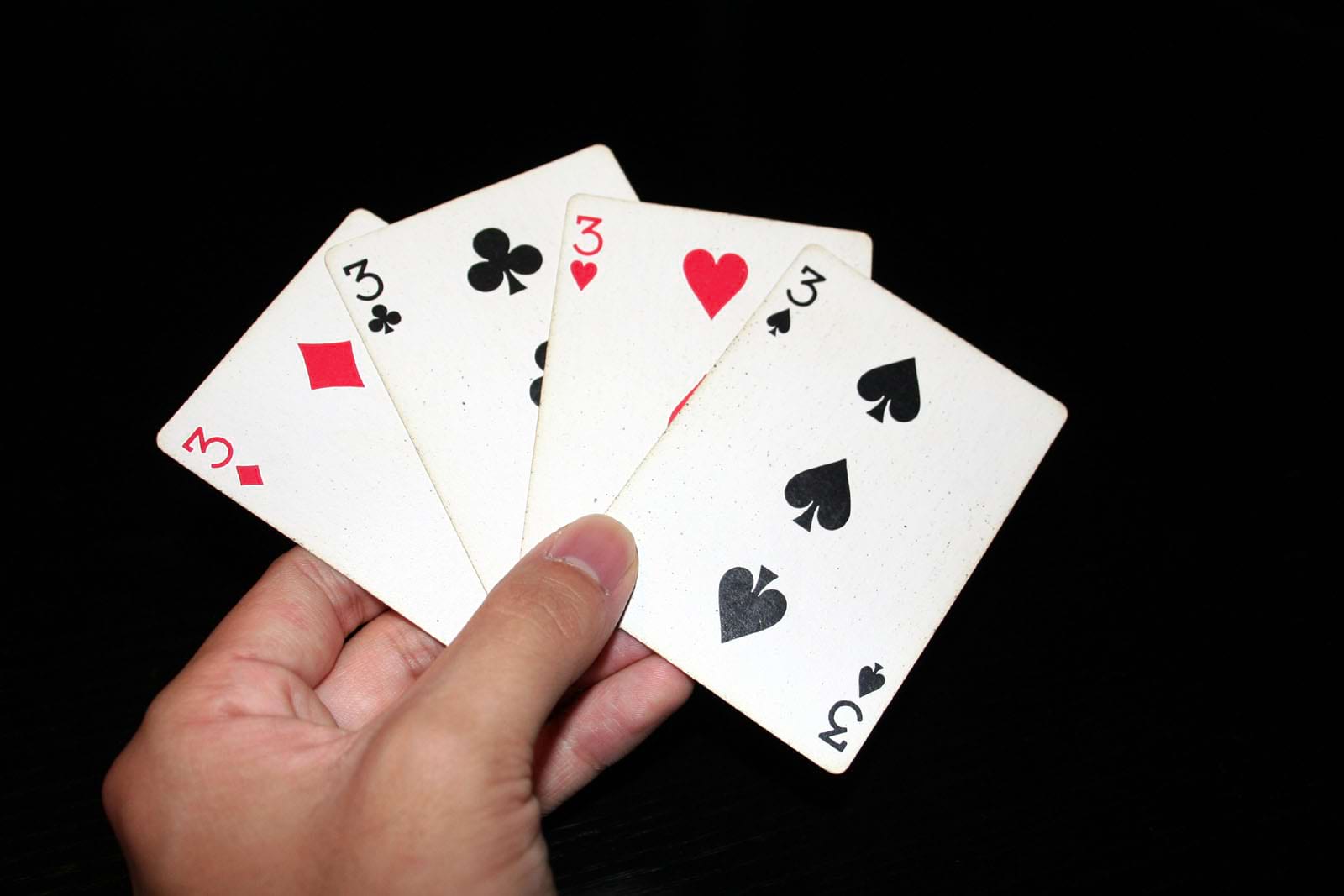
- Formation of Kemps: A kemps consists of four cards of the same rank. For example, four Aces, four Kings, etc.
- Secret Communication: Teammates use prearranged signals to indicate to each other when they have obtained a kemps. These signals must be discreet to avoid detection by the opposing team.
- Turn Sequence: Four cards are dealt face-up to the center of the table. All players simultaneously (no structured turns) swap cards from their hand with face-up cards on the table. Each player can only hold up to four cards at a time. The goal is to form a kemps while also trying to decipher if the opposing team is signaling kemps.
- No wanted center cards: In case none of the players wish to exchange their cards with the ones in the center, the dealer can clear the center cards and deal out four new ones, keeping the game going.
- Calling Kemps: "Kemps!" — A player calls this when they believe their own partner has four of a kind. If correct, the opposing team receives a penalty letter. If wrong, the calling team receives a letter. "Counter Kemps!" (or "Stop Kemps!") — A player calls this when they suspect an opponent has four of a kind. If correct, the opponent's team receives a letter. If wrong, the calling team receives a letter.
- Winning the Game: Teams receive letters spelling K-E-M-P-S for each penalty. The first team to spell KEMPS loses the game.
Tips for Success
- Develop a system of subtle signals with your teammate to communicate when you have kemps.
- Pay close attention to the behavior of your opponents to determine if they are signaling kemps.
- Use deception and misdirection to confuse the opposing team and protect your kemps.
- Practice good teamwork and communication to coordinate your strategy with your teammate effectively.
Tips & Strategy
To succeed in Kemps, develop subtle communication signals with your teammate and pay close attention to opponents' behavior to detect their kemps attempts.
In Kemps, effective communication and observation skills are key. Develop a secret language or signals with your teammate to convey information about your hand and detect opponents' attempts at kemps.
Trivia & Fun Facts
Kemps is known by various names in different regions, including "Campbell," "Kent," "Coke and Pepsi," and "Schwimmen."
What are some common signals used by players to indicate kemps? How does the gameplay of Kemps encourage teamwork and communication?
History & Culture
The origins of Kemps are unclear, but it is believed to have been played for decades as a social game among friends and family.
Kemps holds cultural significance as a social card game that fosters teamwork and communication among players. It is often played casually at gatherings or parties.
Variations & House Rules
Explore variations of Kemps by adjusting the number of cards dealt, the number of teams, or the specific kemps combination required for victory.
Customize your Kemps games by creating unique communication signals with your teammate or introducing additional challenges and penalties for failed kemps attempts.