How to Play
A fast addition card game where players add, subtract, or reset a shared running total, losing tokens whenever they cannot play without pushing the total past 99.
Ninety-Nine is a fast addition card game for 2 to 5 players in which a shared total rises as each card is played, and no one may cause the total to exceed 99. Every player holds exactly 3 cards at all times; on your turn you play one card to a central discard pile, announce the new running total out loud, and draw a replacement from the stock. Most cards add their face value, but several ranks bend the rules: Aces count as 1 or 11 (player's choice), 4s reverse the direction of play, 9s jump the total straight to 99, Kings count as 0 (a pass), and 10s add or subtract 10. If you cannot play any card without pushing the total over 99, you lose the hand and surrender one of your 3 tokens. Run out of tokens and you drop out. The last player still holding tokens wins the match. The game is a staple mental-arithmetic teaching game and travels well because only a 52-card deck is needed.
Quick Reference
- Give each player 3 tokens (lives).
- Deal 3 cards to each player from a standard 52-card deck.
- Running total starts at 0.
- Play one card, announce the new running total, and draw a replacement.
- Aces = 1 or 11, 4 = 0 and reverse, 9 = set total to 99, 10 = plus or minus 10.
- Jacks, Queens = 10. Kings = 0 (pass). 2-8 = face value.
- Cannot play without exceeding 99? Lose 1 token.
- Lose all 3 tokens and you are out.
- Last player with tokens wins the match.
Players
2 to 5 players, best at 3 to 4. Play rotates clockwise by default but can be reversed by any 4. No partnerships; every player is for themselves. A full match to one survivor takes 15 to 30 minutes.
Card Deck
One standard 52-card French-suited pack with jokers removed. For 5+ players, some groups shuffle in a second deck. Cards do not rank by suit; only the face value and the special-card effect matter. Keep 3 tokens (chips, coins, matchsticks) per player within reach; these track lives.
Objective
Stay in the game longer than every other player. You do this by avoiding the forced bust (when you cannot play any card without pushing the shared total over 99) which costs you one of your 3 tokens. The last player who still has at least one token wins the match.
Setup and Deal
- Give each player 3 tokens. These are lives; losing all 3 eliminates you.
- Shuffle the 52-card deck thoroughly and deal 3 cards face down to each player.
- Place the remaining cards face down as the stock pile in the centre.
- Leave space beside the stock for the discard pile. Announce a starting total of 0.
- The player to the dealer's left plays first.
Gameplay
- Play a card: On your turn, choose one card from your 3-card hand and place it face up on the discard pile.
- Announce the new total: Add (or subtract, or set) the card's value to the running total and call it aloud. Every player must hear the new number.
- Draw a replacement: Draw the top card of the stock into your hand, keeping you at 3 cards. If the stock runs out, shuffle the discard pile (except the most recent card) into a new stock.
- Bust: If you cannot play any card without pushing the total above 99, you lose the hand. Surrender one token to the centre (or return it to the bank), collect all cards, reshuffle, and redeal 3 cards to every surviving player. The player to the left of the buster leads the next hand.
- Special card effects override face value. See Special Cards below.
Special Cards
- Ace: Counts as 1 or 11, chosen by the player when played.
- 2 through 8: Count as face value added to the total.
- 3: Adds 3, and the next player loses their turn (play skips).
- 4: Counts as 0 and reverses the direction of play. With only 2 players left, the player who played the 4 simply takes another turn.
- 9: Sets the running total immediately to 99, regardless of the previous value. A 9 is almost always a pass-the-problem card.
- 10: Counts as plus 10 OR minus 10, chosen by the player when played.
- Jack, Queen: Count as 10 added to the total.
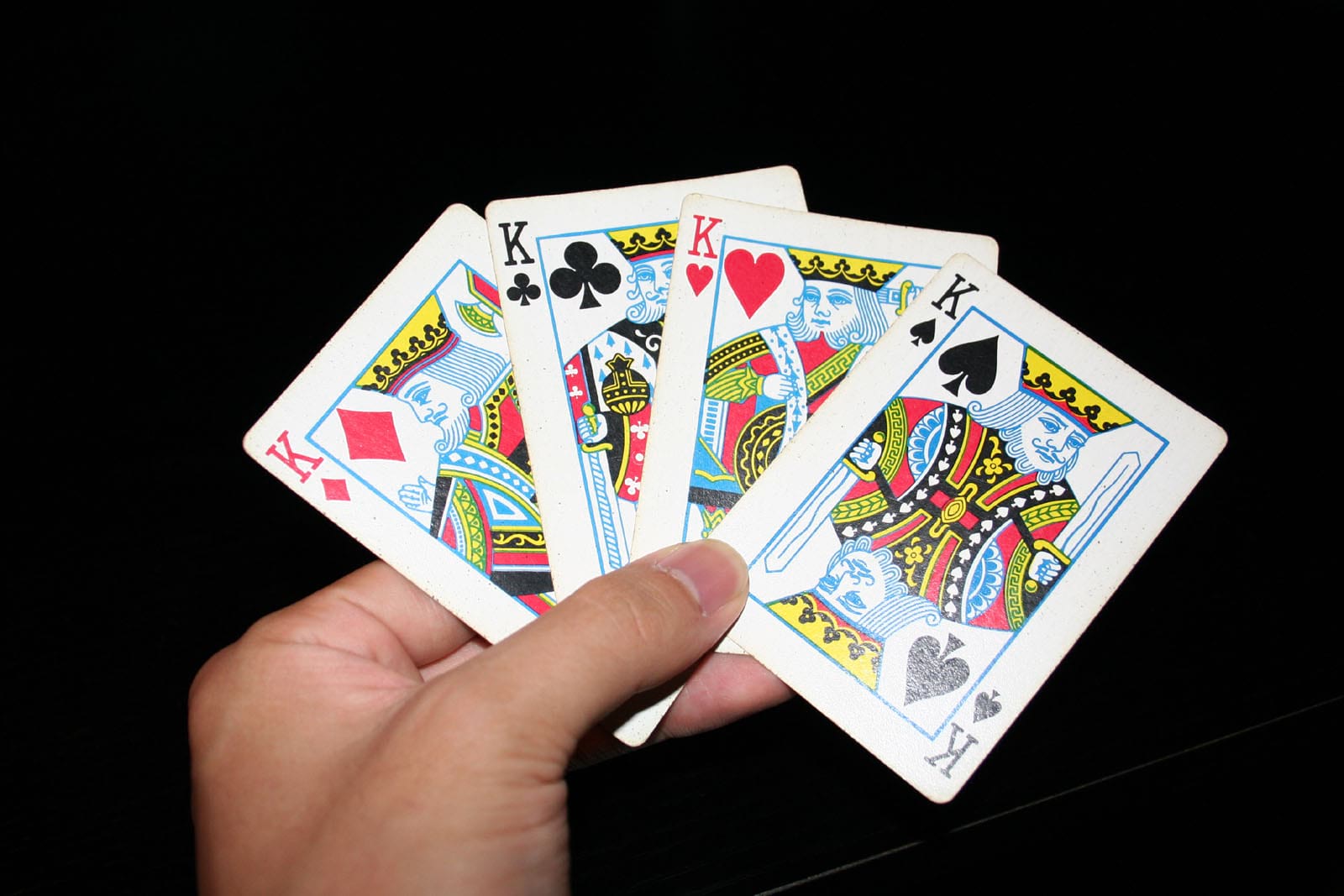
- King: Counts as 0 (the King is a free pass that does not change the total).
Scoring
- There is no point scoring during a hand. The only currency is tokens.
- Bust penalty: The player who cannot play loses 1 token.
- Elimination: When a player loses their 3rd token, they are out of the match and stop receiving cards.
- Match win: The last player with at least one token wins. If two or more players still have tokens when no one else remains (not possible under normal rules since only one player busts at a time), the player with the most tokens wins.
Winning
The match ends when only one player still has at least one token. That player is the winner. A casual alternative is to play a fixed number of hands (10 or 20) and declare the player with the most tokens remaining the winner, which keeps play inclusive when time is short.
Common Variations
- Token count: Increase starting tokens to 4 or 5 for longer matches, or drop to 2 for fast elimination games.
- Starting total: Begin with a total of 50 or 75 rather than 0 to shorten hands and increase the pressure. Advanced groups sometimes start at 99 and subtract down to 0, reversing the bust direction.
- 9 variant: Some groups play 9 as a pass (0) and King as the card that jumps to 99. This is a common regional swap; agree before play begins.
- Penalty stakes: Instead of tokens, the buster pays a small ante into a pot; pot winner is the last survivor.
- Ring of 99: For large groups, deal 5 cards instead of 3 and increase the ceiling to 199 or 299 with extra zero-value specials.
Tips and Strategy
- Hold at least one escape card (4, King, or 9) when the total climbs past 80. Those are your reliable pass-the-turn options.
- Use 9s when the total is low; they are nearly wasted when the total is already near 99. Save Kings for high totals since they preserve the current value.
- Aces are dual-purpose. When the total is low, play an Ace as 11 to speed the round; when the total is high, play it as 1 to stall.
- Track special cards that have been discarded. Once all four Kings are gone, the supply of zero-value escape cards has effectively halved.
- In 2-player endgames, the 4 reverses back to you; treat it as a zero-value card rather than a direction changer.
Glossary
- Running total: The shared number that climbs as cards are played. Must never exceed 99.
- Bust: Failing to play a card that keeps the total 99 or under. Costs 1 token.
- Escape card: Any card that preserves or lowers the total: King (0), 4 (0 + reverse), 9 (sets to 99 to pass the bust risk), Ace (1), or a negative 10.
- Token: One of the 3 lives each player begins with. Also called chip or life.
- Skip: The effect of a 3 that forces the next player to miss their turn.
- Reverse: The effect of a 4 that flips play direction (clockwise becomes counter-clockwise and vice versa).
Tips & Strategy
Hoard escape cards (Kings, 4s, 9s, low Aces) for moments when the total climbs past 80. Use 9s early when the total is low, since they are wasted near 99, and save Kings for tight end-of-hand spots. Track which escape cards have been discarded so you know what is still available; when all four Kings are gone, the safety net is thinner.
Ninety-Nine rewards inventory management. The deck has only a finite supply of escape cards (Kings, 4s, 9s, and negative 10s); once you see them discarded, you know future hands will be tighter. Aces are the swing cards: they let you stall (as 1) or accelerate (as 11) based on the current total, so experienced players tend to hold an Ace for the moment the total first approaches 70 or 80.
Trivia & Fun Facts
Regional conventions differ on whether the 9 or the King is the card that jumps the total to 99. Both conventions have been printed in mainstream rule books, which is why groups often pause to confirm the rule on the first hand. The game is sometimes marketed in dedicated card decks featuring only the special cards, though any 52-card pack will do.
-
01In the standard Wikipedia rules of Ninety-Nine, which card immediately sets the running total to 99?Answer The 9. (Some regional variants swap this with the King, which is why groups often confirm the convention on the first hand.)
-
02How many tokens does each player start with, and what happens when a player loses their last one?Answer Each player starts with 3 tokens; losing the 3rd eliminates the player from the match.
History & Culture
Modern Ninety-Nine is a 20th-century evolution of older arithmetic shedding games and is documented in many mid-century American card-game compendia under several names. It has become a common mental-arithmetic teaching game for children because every turn reinforces quick addition, and its structure travels easily across languages since only numbers are called.
Ninety-Nine is widely taught in primary schools as a mental-arithmetic game because it enforces addition on every turn without explicit teaching. In social settings it functions as a light party or drinking game, where losing a token can be substituted with taking a sip. Its simple universal rules make it a common travel card game across language boundaries.
Variations & House Rules
Token counts can be raised or lowered to change match length. Starting totals of 50 or 75 quicken the pace. Some regional variants swap the 9 and King effects, or reverse direction so the total counts down from 99 to 0. Large-group variants increase hand size and ceiling.
For children just learning addition, allow the 9 to be played freely as a reset without the full 99 jump so negative risk is reduced. For strategic groups, play to 2 tokens instead of 3 to increase elimination tension. Playing in teams of 2 with shared tokens gives a cooperative angle.