Get the full experience in CardRules+
300+ games with text-to-speech, game night planner, quick reference cards, and offline access.
Download on Google Play- Use three decks with jokers.
- Deal 15 cards to each player.
- Turn one card to start the discard pile.
- Draw two cards from stock or pick up the discard pile.
- Form or extend group melds and sequence melds.
- Discard one card to end your turn.
- Samba: 1,500 points. Natural canasta: 500. Mixed canasta: 300.
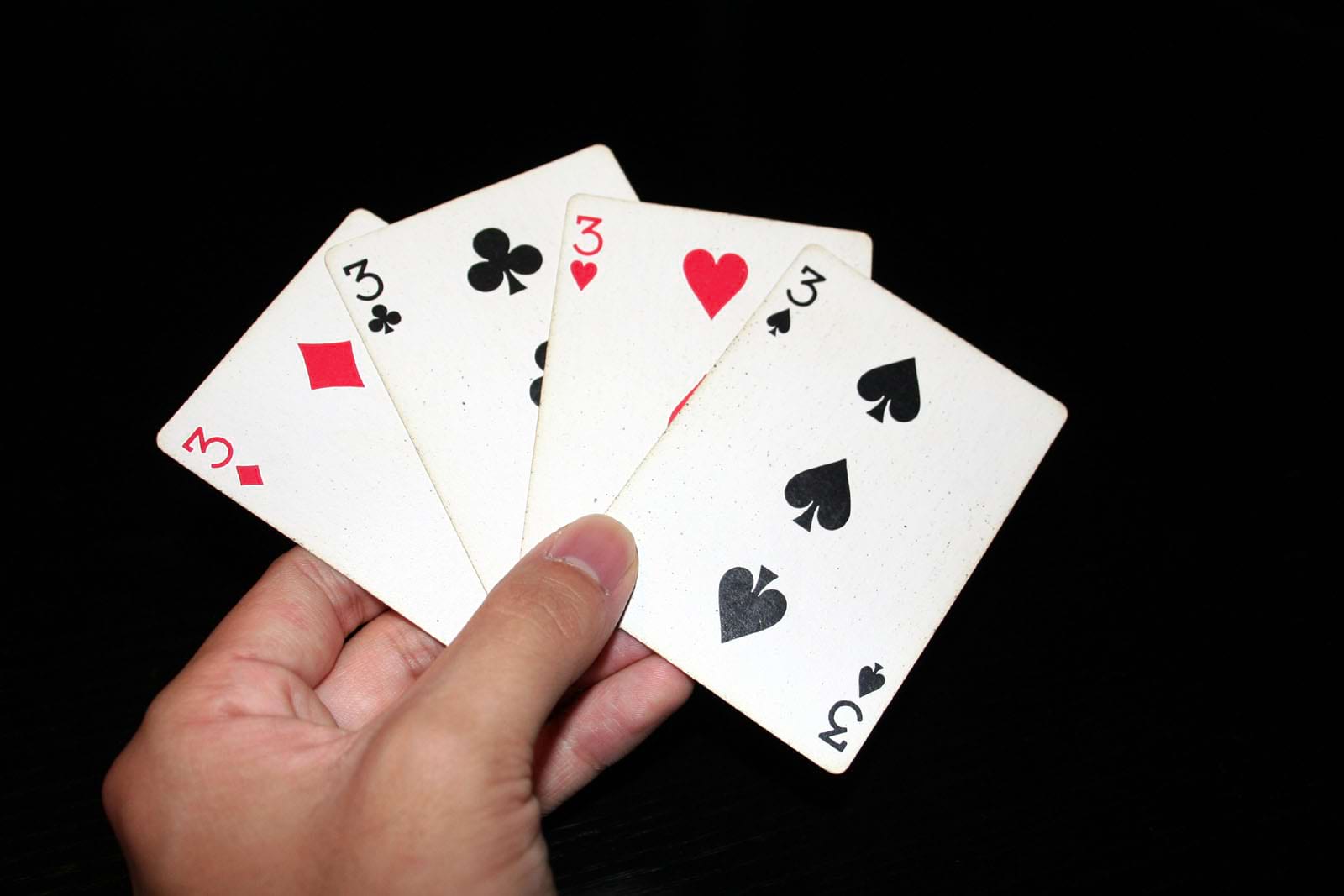
- Red Threes are bonus cards worth 100 each.
Rules
Samba is an advanced Canasta variant that allows sequence melds in addition to traditional group melds. Played with three decks, it offers deep strategic possibilities and rewards players who can build both types of melds efficiently.
Objective
Score points by forming canastas (seven-card group melds) and sambas (seven-card sequence melds of the same suit). The first team to reach 10,000 points wins.
Setup
- Players: 2-6 players, typically in partnerships.
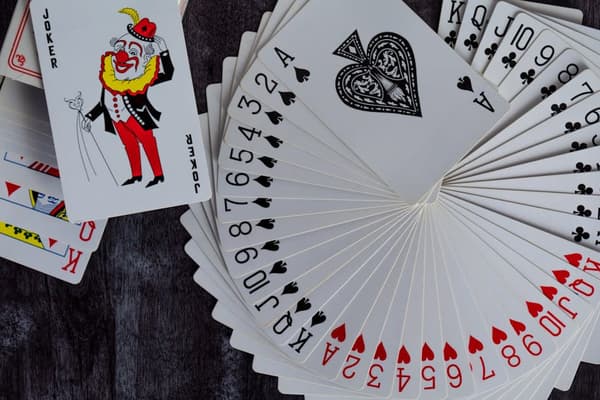
- Deck: Three standard 52-card decks with jokers (162 cards total).
- Deal: Deal 15 cards to each player. Place the rest as the stock pile and turn one card to begin the discard pile.
Gameplay
- Step 1: Draw two cards from the stock or pick up the entire discard pile if you can immediately meld the top card.
- Step 2: Form group melds (three or more cards of the same rank) or sequence melds (three or more consecutive cards of the same suit). Wild cards can be used in group melds but not in sequence melds.
- Step 3: Add cards to your existing melds to build toward canastas (seven-card groups) or sambas (seven-card sequences).
- Step 4: Discard one card to end your turn. The round ends when a player goes out after their team has at least two canastas or sambas.
Scoring
- A samba (pure seven-card sequence) is worth 1,500 points. A natural canasta is worth 500 and a mixed canasta is 300.
- Card values: Jokers 50, Aces and Twos 20, Kings through Eights 10, Sevens through Threes 5. Red Threes are bonus cards worth 100 each.
Variations
- Two-Player Samba: Each player is dealt 15 cards and plays individually without a partner.
- Bolivia: A related variant that adds additional wild card melds and escaleras (sequences) for even more scoring options.
Tips and Strategies
- Build sambas when possible, as they are worth triple a natural canasta.
- Coordinate with your partner on which melds to pursue to avoid duplication.
- Control the discard pile by avoiding discards that help opponents pick up the pile.
Tips & Strategy
Focus on building sambas for their high point value, but do not neglect standard canastas needed to go out. Coordinate closely with your partner.
Sambas are extremely valuable but harder to complete. Balance your approach between achievable canastas and high-reward sambas based on your hand.
Trivia & Fun Facts
Samba gets its name from the seven-card sequence meld, which is worth 1,500 points and is considered the crown jewel of the game.
How many points is a samba (seven-card sequence meld) worth in the standard game?
History & Culture
Samba was developed in the 1940s as an extension of Canasta, originating in South America before spreading worldwide.
Samba is highly regarded in competitive Canasta circles and remains popular in South America, Europe, and among serious card game enthusiasts worldwide.
Variations & House Rules
Bolivia is a closely related variant that adds wild card melds, while two-player Samba simplifies the partnership element.
Lower the target score to 5,000 points for a shorter game, or allow wild cards in sequences for an easier experience.