Get the full experience in CardRules+
300+ games with text-to-speech, game night planner, quick reference cards, and offline access.
Download on Google Play- Shuffle the deck and lay all cards face-down in a grid.
- Cards should not overlap.
- Flip any two cards face-up for all to see.
- If they match in rank, keep the pair and go again.
- If no match, flip both back face-down and your turn ends.
- Each matched pair counts as one point.
- Player with the most pairs when all are collected wins.
- Ties share the victory.
Rules
Concentration is a card-matching game that tests memory and focus. All cards are laid face-down, and players take turns flipping two cards at a time, trying to find matching pairs. It is simple enough for young children yet challenging enough to engage adults.
Objective
Collect the most pairs by remembering the positions of face-down cards and successfully flipping two cards of the same rank on your turn.
Setup
- Players: 2 to 6 players.
- Deck: Standard 52-card deck (or a subset for shorter games).
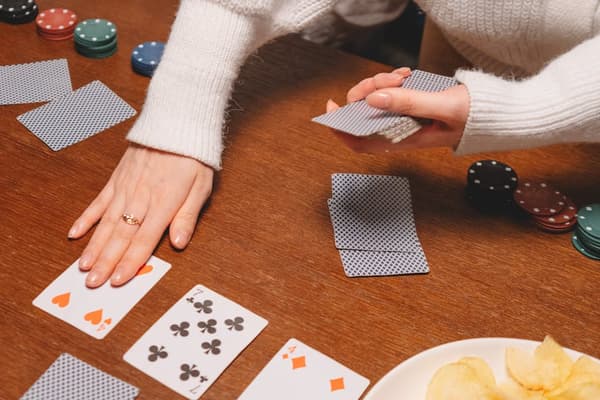
- Layout: Shuffle the deck and lay all cards face-down in a grid pattern on a flat surface. Cards should not overlap.
Gameplay
- Flipping Cards: On your turn, flip any two cards face-up so all players can see them.
- Matching: If the two cards share the same rank (e.g., two 7s or two Kings), you keep the pair and take another turn.
- No Match: If the cards do not match, flip them back face-down in the same position. Your turn ends and play passes to the left.
- Remembering: Pay close attention to every card flipped by all players, not just on your own turn.
Winning
When all pairs have been collected, the player with the most pairs wins. In case of a tie, those players share the victory.
Tips and Strategies
- Create a mental map of the grid and associate card positions with landmarks.
- Pay just as much attention to other players' turns as your own.
- In early rounds, prioritize memorizing over matching — the endgame is where memory wins.
Tips & Strategy
Develop a systematic approach to scanning the grid. Some players find it helpful to mentally group cards by region or to silently repeat positions as they are revealed.
Early in the game, information is scarce, so avoid random guessing. Each card revealed is valuable data — store it carefully for later rounds.
Trivia & Fun Facts
Studies show that children often outperform adults at Concentration, possibly because their memory formation is more visual and less cluttered by verbal processing.
In Concentration, what happens if you successfully match two cards on your turn?
History & Culture
Concentration has been played in various forms for centuries. It became widely popular as a television game show format in the mid-20th century.
Concentration transcends language barriers, making it popular in schools and homes worldwide as both entertainment and a cognitive development tool.
Variations & House Rules
Use fewer cards for a quicker game, or add a rule that matched pairs must also share the same color for increased difficulty.
Adjust the grid size based on age and skill level. A 4x4 grid is great for young children, while using the full 52-card deck challenges even adults.