Get the full experience in CardRules+
300+ games with text-to-speech, game night planner, quick reference cards, and offline access.
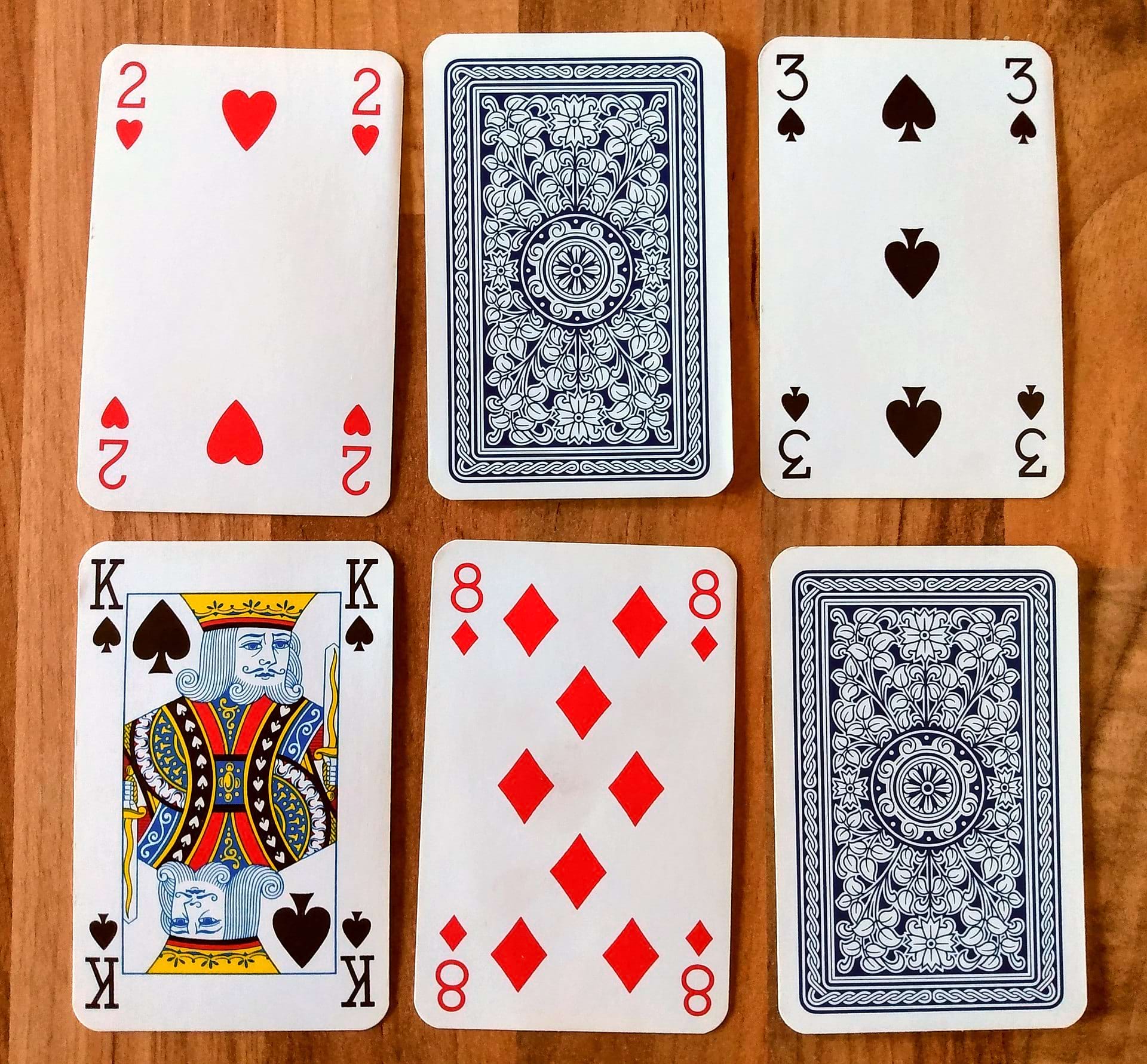
Download on Google Play- Deal 6 cards face-down in a 3x2 grid (or 4 cards in a 2x2 grid).
- Turn 2 cards face-up to start.
- Place remaining cards as draw pile; flip one for discard pile.
- Draw from the draw pile or discard pile.
- Replace any card in your grid or discard the drawn card.
- Replaced cards go face-up to the discard pile.
- When one player's grid is fully revealed, others get one final turn.
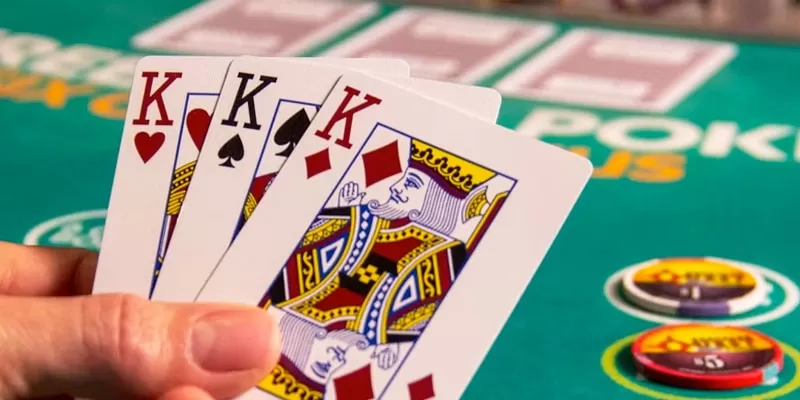
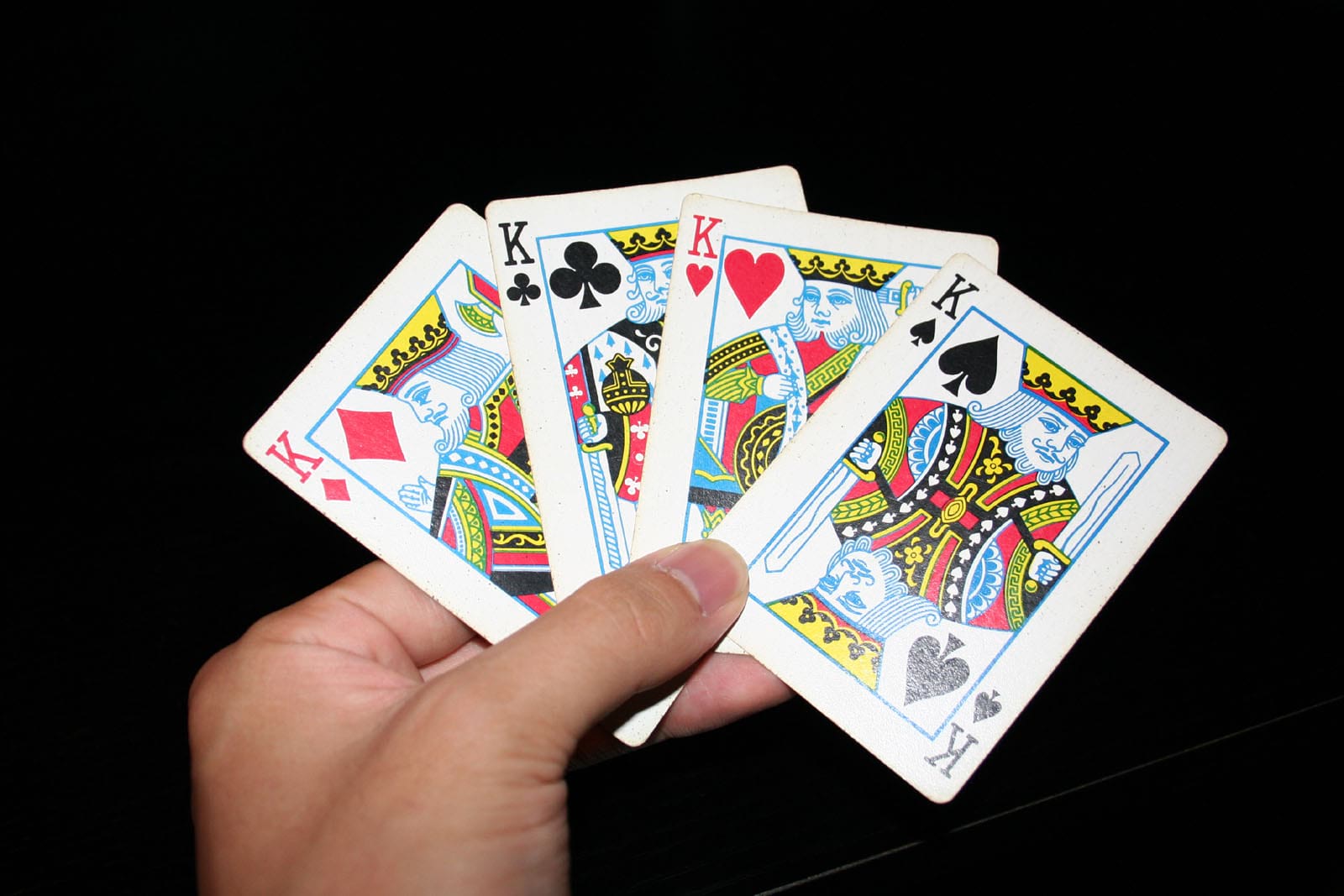
- Ace: 1, 2-9: face value, 10/J/Q: 10, King: 0, Joker: -2.
- Matching pairs in the same column cancel out to zero.
- Lowest total score after all rounds wins.
Rules
Golf is a delightful card game that challenges players to achieve the lowest score possible over the course of multiple rounds. Golf is easy to learn and can be enjoyed by players of all ages. It can be played with either 6 cards or 4 cards face down.
6-Card Setup
- Shuffle and Deal: Gather the players in a circle and shuffle a standard 52-card deck (jokers can be used as well). Deal six cards to each player face down. If there are four or more players, combine two decks; for eight or more players, use three decks.
- Draw and Discard Pile: Place the remaining deck face down to form the draw pile. Flip the top card face up to start the discard pile.
- Grid Formation: Each player arranges their cards in a 3x2 grid in front of them without looking at them.
6-Card Gameplay
- Turning Cards: Players turn any two cards in their grid face up, one at a time.
- Scoring System: Explain the scoring system to all players. Emphasize that lower points are desirable.
- Taking Turns: Begin with the player to the dealer's left. Each turn, draw a card from the draw or discard pile, then decide whether to replace one of your cards with the drawn card.
- Deciding to Replace Cards: You have the freedom to choose any card in your grid to replace, regardless of whether it's face up or face down. If you decide not to replace a card, you can discard the drawn card face up into the discard pile. When replacing a card, pick up the chosen card and place it face up in the discard pile, then place the newly drawn card face up in that position. If the card you drew came from the discard pile, you cannot discard it immediately.
- Pairing Cards: Try to make pairs of the same rank within your grid. Pairs cancel each other out and have zero points. The pairs need to be in the same column, so the first card above the other.
- Final Turn: After a player's grid is entirely face up, every other player takes one final turn. Then, all players reveal their cards.
- Scoring: Score each player's points based on the value of their remaining cards. Record scores for each round.
- Multiple Rounds: Shuffle and deal cards for subsequent rounds. Continue until reaching the agreed-upon number of rounds or points.
- Winning: The player with the lowest total score wins the game.
4-Card Setup
- Shuffle and Deal: Shuffle a standard 52-card deck and deal four cards to each player. If needed, use multiple decks.
- Draw and Discard Pile: Form the draw and discard piles as described in the 6-card rules.
- Grid Formation: Each player arranges their cards in a 2x2 grid face down.
4-Card Gameplay
- Peeking at Cards: Players secretly peek at any two cards in their grid without revealing them to others.
- Scoring System: Ensure all players understand the scoring system, focusing on achieving the lowest score.
- Taking Turns: Players take turns drawing a card and deciding whether to replace a card in their grid, following the same rules as in the 6-card version.
- Pairing Cards: Players aim to create pairs within their grid, with pairs having zero points.
- Ending the Game: Any player can signal the end of the game by knocking on the table. After the final turn, scores are tallied.
- Scoring and Winning: Score each player's points and determine the winner as per the 6-card rules.
Scoring
- Card Values: Ace: 1 point, 2-9: face value, 10/Jack/Queen: 10 points, King: 0 points, Joker: -2 points (a pair of Jokers cancels out like normal pairs, going from -4 to 0)
- Pairing Cards: If two cards of the same rank appear in the same column within a player's grid, they cancel each other out and are worth zero points.
- Ending the Game: Optionally, players can incur penalties for ending the game prematurely. If a player ends the game by "knocking" or by revealing their last card and they do not have the lowest score for the round, they may receive a penalty.
- Jokers or Bonus Cards: If included, Jokers or designated bonus cards may have special scoring rules, typically valued negatively.
Tips & Strategy
Manage your hand wisely, pay attention to opponents' moves, and stay flexible with your strategy to achieve success in Golf.
Strategic card exchanges and careful management of your hand are key to success in Golf. Pay attention to opponents' moves and adapt your strategy accordingly.
Trivia & Fun Facts
Did you know? Golf is also known by other names, including Polish Polka and Polish Poker.
What is the objective of Golf? How are points scored in the game?
History & Culture
Golf has a long history as a popular card game, enjoyed by players of all ages for its simplicity and strategic depth.
Golf holds cultural significance as a game that fosters social interaction and strategic thinking. It's often played in gatherings and enjoyed by players of all backgrounds.
Variations & House Rules
Explore variations of Golf by adjusting the number of cards dealt, introducing wild cards, or modifying scoring rules.
Customize your Golf experience with house rules or unique scoring systems to add variety to your games.