Get the full experience in CardRules+
300+ games with text-to-speech, game night planner, quick reference cards, and offline access.
Download on Google Play- Use two 54-card decks (108 cards total, including Jokers).
- Deal 9 cards in round 1, increasing by 1 each round up to 16.
- Each round has a specific contract (combinations of Threes and Fours).
- Draw one card from the stock or discard pile.
- Lay down melds that meet the round's contract requirement.
- Tack cards onto existing melds after playing your own.
- Discard one card to end your turn.
- Joker: 50 pts, Black Ace: 15 pts, Face cards/10: 10 pts each.
- Numbered cards 2-9: face value in penalty points.
- Winning a round subtracts 50 from your total score.
- Lowest cumulative penalty score after 9 rounds wins.
Rules
Kalooki, a captivating Contract Rummy variation, goes by various names like Kaluki or Caribbean Kalooki. It holds a significant presence in the Caribbean Islands, especially Jamaica and Trinidad and Tobago. Its allure extends to other regions, earning it the moniker "Jamaican Rummy."
Kalooki is also known as "Kaluki"
How to Play Kalooki?
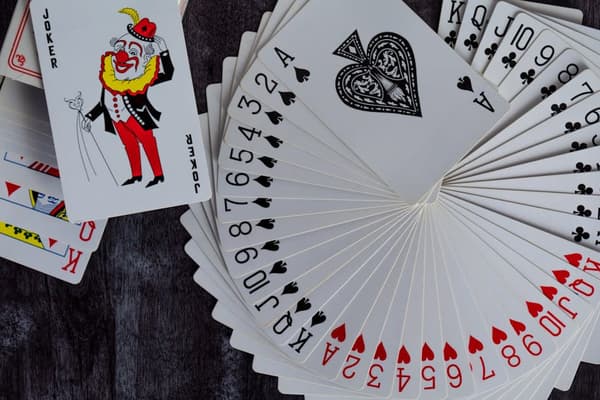
Kalooki is played using a shoe of two Joker variants of the Anglo-American 54-card decks. Jokers are included, and therefore a Kalooki deck should have 108 total cards in it.
Sets
Kalooki is broken up into 9 games, with a total "set" of Kalooki ending after those 9 games. During each game, there is a particular "contract" that must be met by each Player in order to score for that game. For example, in the first game, a Player must at least play three "threes."
Threes and Fours
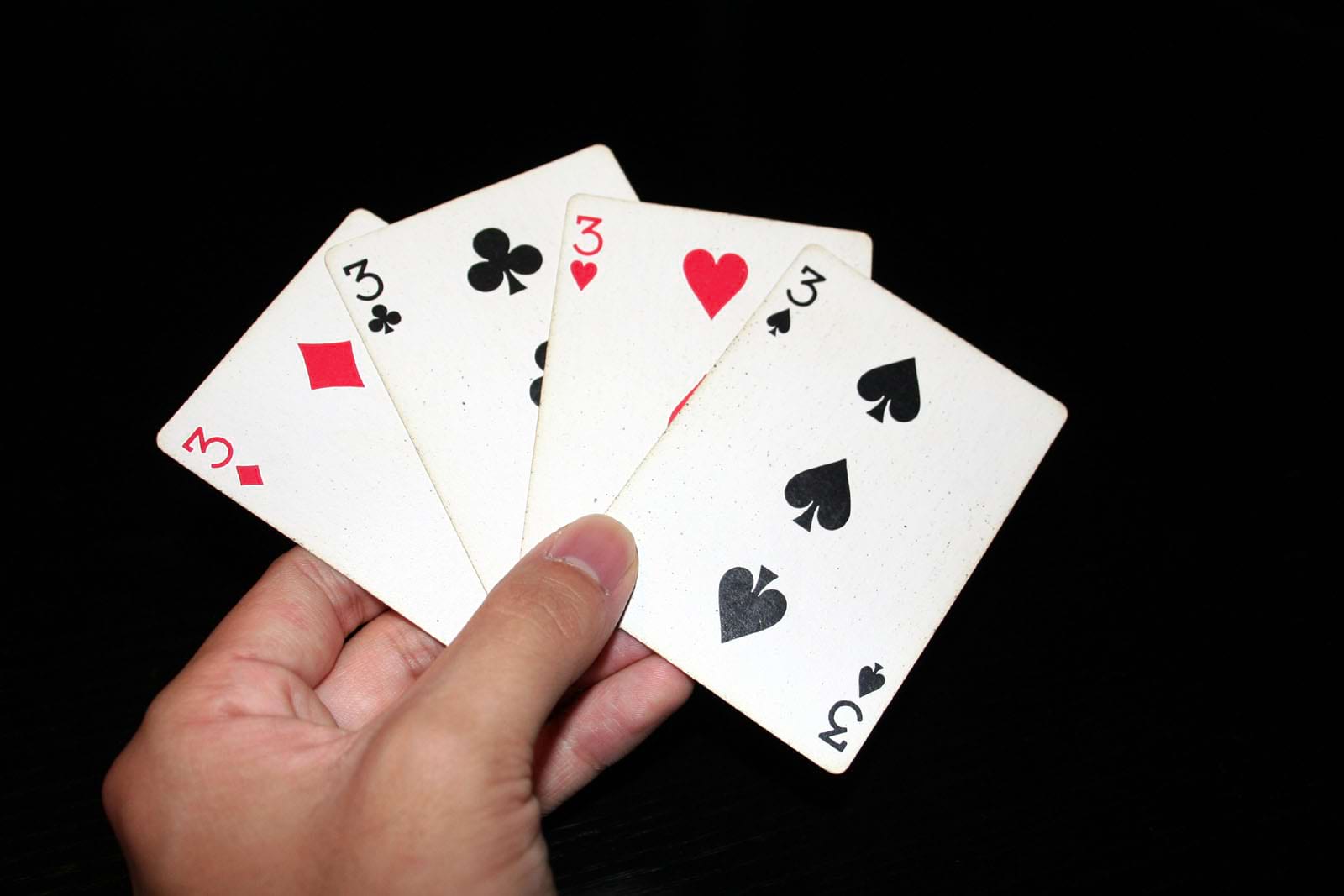
- Threes (called "books" in other Rummy games) are a set of three or more cards that are all the same rank. Suit does not matter, and cards of the same suit may be in a single Three.
- Fours (called "Sequences" in other Rummy variations) are a sequence of at least 4 cards that are all the same suit, ascending or descending in rank (Ace, 2-9, 10, J, Q, K, Ace).
- Jokers may not be used consecutively. 9, Joker, Joker, Q is not valid, but 9, Joker, Jack, Joker is valid. The same rule applies to Threes as well.
Deal
The Dealer is decided randomly, and then will deal 9 cards to each Player including themselves for the first game. The Dealer position will change between each round of Play, moving clockwise around the circle of Players at the end of each game.
Gameplay
The game begins with the Player immediately clockwise from the Dealer taking their turn first. A Player must draw one card at the start of their turn, and discard one card at the end of it. The first discard should be placed next to the stock, face-up. All discards will be placed face-up.
Calling
Kalooki has a special rule known as "calling." When a Player has not laid out any melds, or tacked any cards, they may call. A Player calls when another Player has discarded a card at the end of their turn, and it is not their turn next in the rotation. The call is essentially a bid for the card that was just discarded.
- If the discarding Player allows the call, the calling Player will immediately take the discard, as well as drawing another card from the stock. This gives the calling Player 2 extra cards.
- If the discarding Player disallows the call, the Player whose turn it is gets first dibs on the discard.
- If they do not want it, the card is discarded as normal into the discard pile and play continues.
Ending and Winning
Each round ends when a Player empties their hand of cards, and has met the minimum contract requirement. The winner of the overall game is the Player with the lowest cumulative penalty score. The winner of a round receives a bonus and subtracts 50 points from their total score.
Kalooki Rules
- Jokers cannot be exchanged like in other rummy games. The original Player of a Four with a Joker in it may replace the Joker with the card it represents, but the Joker must then be moved to either end of the Four. Jokers in Threes cannot be moved at all.
- A Player must meet the minimum melding requirement laid out before the round ends, otherwise, they will receive a 50-point penalty in addition to the deadwood in their hand.
- Players may also "tack" cards, adding individual legal cards onto melds that are already laid out on the board. A Player may only tack after they have played all their melds on that turn. If a Player tacks, they will not be allowed to form a meld afterward on the same turn.
Scoring & Points
Each progressive round involves the dealing of an additional card. All Threes and Fours played by a Player must have unique suits relative to each other, but not across melds. The lowest score at the end of the total set wins.
- Round 1: 9 Card Deal, 3 Threes must be played
- Round 2: 10 Card Deal, 2 Threes and 1 Four
- Round 3: 11 Card Deal, 2 Fours and 1 Three
- Round 4: 12 Card Deal, 3 Fours
- Round 5: 12 Card Deal, 4 Threes
- Round 6: 13 Card Deal, 3 Threes and 1 Four
- Round 7: 14 Card Deal, 2 Threes and 2 Fours
- Round 8: 15 Card Deal, 1 Three and 3 Fours
- Round 9: 16 Card Deal, 4 Fours
Penalty Values
- Joker: 50 Points
- Black Ace: 15 Points
- K, Q, J, 10: 10 Points
- 9-2: Face value in points
- Red Ace: 1 Point
Example Hand
Assume the board has melds: 3-4-5-Joker, 5-5-5, and 9-10-J-Q. And your hand is: 5, 8, K, 7, 8, 9, 10, 4, 10. Presuming you have played no melds, it would be advantageous to play the 7-10 melding first, and then tacking the 5 and K for a 6-card play.
Tips & Strategy
Plan your melds strategically, observe opponents' moves, and use jokers wisely to maximize your score and win in Kalooki.
Strategic planning and careful observation of opponents' moves are crucial in Kalooki. Use jokers wisely and plan your melds to maximize your score and win.
Trivia & Fun Facts
Did you know? Kalooki is sometimes referred to as 'Kaluki' and has various regional variations with unique rules and scoring systems.
What is the objective of Kalooki? How are points scored in the game?
History & Culture
Kalooki has a rich history, originating from traditional rummy games and evolving into a popular card game enjoyed by players worldwide.
Kalooki holds cultural significance as a game that combines elements of traditional rummy with strategic depth and variation. It reflects the diversity and creativity of card games across different cultures.
Variations & House Rules
Explore different variations of Kalooki by adjusting the point thresholds, introducing special rules for jokers, or incorporating unique scoring methods.
Customize your Kalooki experience with house rules or regional variations to add excitement and variety to your games.