Ottieni l'esperienza completa con CardRules+
Oltre 300 giochi con lettura vocale, pianificatore serate di gioco e accesso offline.
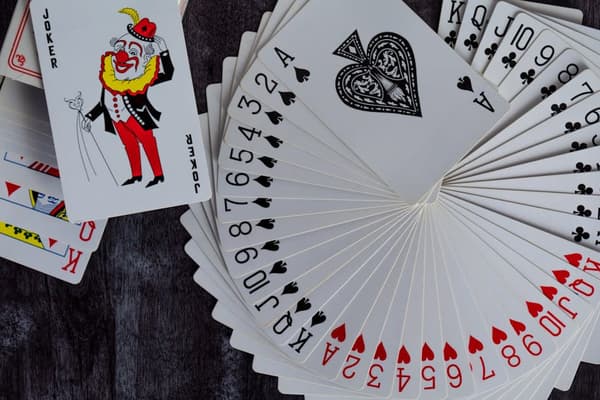
Scarica su Google Play- Usa 2 mazzi da 52 carte + 2 Jolly (106 carte).
- Distribuisci 13 carte a ciascun giocatore.
- Pesca dal mazzo o dalla pila degli scarti.
- Scarta una carta.
- Organizza le 13 carte in sequenze valide e set.
- Dichiarazione valida = 0 punti.
- Figure/10 = 10 punti; Asso = 10 punti; Jolly = 0 punti.
- Il giocatore con il punteggio più basso vince.
Regole
Indian Rummy è una variante del Rummy che si gioca con 2 mazzi da 52 carte più Jolly. I giocatori devono formare sequenze e set per dichiarare vittoria.
Obiettivo
Formare almeno due sequenze valide (di cui una pura, senza Jolly) e il resto in set o sequenze impure, poi dichiarare.
- The game continues until one player reaches the agreed-upon point threshold, usually 100 points or another predetermined value.
- The player with the lowest total score at the end of the game is declared the winner.
Preparazione
Si usano 2 mazzi standard da 52 carte più 2 Jolly (106 carte totali). Distribuisci 13 carte a ciascun giocatore.
- Shuffle the deck thoroughly.
- Determine the dealer for the first hand.
- Deal 13 cards to each player, one at a time, starting with the player to the dealer's left. Place the remaining deck face-down to form the draw pile. Flip the top card from the draw pile to start the discard pile.
Svolgimento del gioco
A turno, ogni giocatore pesca dal mazzo o dalla pila degli scarti, poi scarta una carta. L'obiettivo è organizzare le 13 carte in sequenze e set validi.
- Drawing and Discarding: Players take turns, starting with the player to the dealer's left, drawing a card from the draw pile or the discard pile. After drawing, players must discard one card to the discard pile.
- Forming Sets and Runs: Players aim to create valid sets or runs in their hand. A valid set consists of three or four cards of the same rank. A valid run (sequence) consists of three or more sequential cards of the same suit. Aces can be high (e.g., A-K-Q) or low (e.g., A-2-3), but not both in the same sequence. Jokers (both printed and wild jokers) can substitute for any card in sets and runs. Pure sequence requirement: A player must have at least two sequences, and at least one must be a "pure sequence" (formed without any jokers).
- Declaring: A player can declare their hand after drawing a card and discarding their 14th card. The player must place their valid sets/runs face-up on the table, meeting the pure sequence requirement. An invalid declaration (sets/runs don't meet requirements) results in a heavy penalty (typically 80 points).
- Scoring: Points are assigned to cards not part of valid sets or runs. Face cards (Jacks, Queens, and Kings) are worth 10 points each. Aces are worth 10 points. Numbered cards are worth their face value. Jokers are worth 0 points. Penalty points may be incurred for unmatched cards.
- End of Round: The round ends when a player declares their hand or when the draw pile is exhausted. Players reveal their hands and score points. A new round begins with the next dealer, and players receive new hands.
Consigli e strategie
Forma prima la sequenza pura (obbligatoria). Usa i Jolly per completare sequenze impure o set difficili.
- Start with Sets: Focus on forming sets initially, as they are easier to complete compared to runs. This can help you get rid of high-value cards quickly.
- Observe Discards: Pay attention to the cards discarded by your opponents. This can give you valuable insights into their strategy and help you plan your own moves accordingly.
- Manage Discard Pile: Be cautious when drawing from the discard pile, as it can reveal your intentions to your opponents. Drawing from the discard pile should be done strategically to avoid giving away information.
- Be Mindful of Melds: Be vigilant in recognizing potential melds in your hand. Plan your moves to optimize your melds and minimize your points.
Varianti
Le varianti includono regole diverse per la dichiarazione e l'uso dei Jolly.
- 13-Card Indian Rummy: The most popular variation, played with 13 cards each.
- 21-Card Indian Rummy: Played with 21 cards each, offering a more complex gameplay experience.
- 10-Card Indian Rummy: A quicker variant played with 10 cards each.
Consigli e strategia
Forma subito la sequenza pura. Usa i Jolly con saggezza per completare le combinazioni più difficili.
La pianificazione anticipata della sequenza pura è fondamentale per una dichiarazione valida.
Curiosità e aneddoti
Lo sapevi? Indian Rummy è diventato uno dei giochi di carte online più popolari in India.
Quante sequenze pure sono richieste in Indian Rummy? Almeno una.
Storia e cultura
Indian Rummy è una delle varianti di Rummy più popolari in India, spesso giocata nelle famiglie e nei tornei online.
Indian Rummy è profondamente radicato nella cultura indiana dei giochi di carte.
Varianti e regole della casa
Le varianti includono regole diverse per la dichiarazione e l'uso dei Jolly.
Sperimenta con diverse regole per i Jolly o le condizioni di dichiarazione.