Get the full experience in CardRules+
300+ games with text-to-speech, game night planner, quick reference cards, and offline access.
Download on Google Play- 2-6 players with two 52-card decks plus Jokers (106 cards).
- Deal 13 cards to each player.
- A random card is drawn to determine the wild Joker rank for the round.
- Draw one card from the draw pile or discard pile.
- Arrange cards into sets (same rank) and runs (same suit, sequential).
- Discard one card to end your turn.
- Declare when you have valid melds including at least one pure sequence.
- Face cards and Aces: 10 points each; numbered cards: face value.
- Jokers: 0 points; unmatched cards count as penalty.
- Invalid declaration: 80-point penalty.
- Lowest cumulative score wins.
Rules
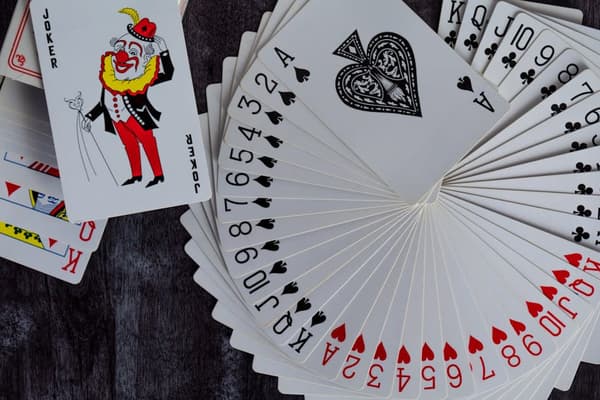
Indian Rummy is a classic card game known for its strategic depth and engaging gameplay. It is typically played by 2 to 6 players using two standard 52-card decks plus jokers (106 cards total). A wild joker is determined at the start by drawing a random card from the deck — all cards of that rank become jokers for the round.
Objective
The objective of Indian Rummy is to score fewer points than your opponents by forming valid sets (three or four cards of the same rank) and runs (three or more sequential cards of the same suit).
- The game continues until one player reaches the agreed-upon point threshold, usually 100 points or another predetermined value.
- The player with the lowest total score at the end of the game is declared the winner.
Setup
- Shuffle the deck thoroughly.
- Determine the dealer for the first hand.
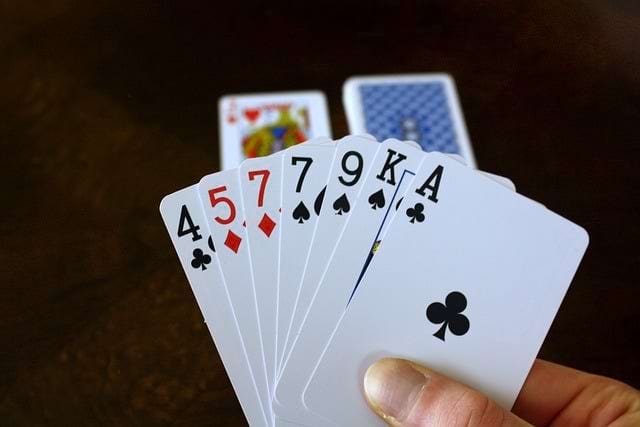
- Deal 13 cards to each player, one at a time, starting with the player to the dealer's left. Place the remaining deck face-down to form the draw pile. Flip the top card from the draw pile to start the discard pile.
Gameplay
- Drawing and Discarding: Players take turns, starting with the player to the dealer's left, drawing a card from the draw pile or the discard pile. After drawing, players must discard one card to the discard pile.
- Forming Sets and Runs: Players aim to create valid sets or runs in their hand. A valid set consists of three or four cards of the same rank. A valid run (sequence) consists of three or more sequential cards of the same suit. Aces can be high (e.g., A-K-Q) or low (e.g., A-2-3), but not both in the same sequence. Jokers (both printed and wild jokers) can substitute for any card in sets and runs. Pure sequence requirement: A player must have at least two sequences, and at least one must be a "pure sequence" (formed without any jokers).
- Declaring: A player can declare their hand after drawing a card and discarding their 14th card. The player must place their valid sets/runs face-up on the table, meeting the pure sequence requirement. An invalid declaration (sets/runs don't meet requirements) results in a heavy penalty (typically 80 points).
- Scoring: Points are assigned to cards not part of valid sets or runs. Face cards (Jacks, Queens, and Kings) are worth 10 points each. Aces are worth 10 points. Numbered cards are worth their face value. Jokers are worth 0 points. Penalty points may be incurred for unmatched cards.
- End of Round: The round ends when a player declares their hand or when the draw pile is exhausted. Players reveal their hands and score points. A new round begins with the next dealer, and players receive new hands.
Tips and Strategies
- Start with Sets: Focus on forming sets initially, as they are easier to complete compared to runs. This can help you get rid of high-value cards quickly.
- Observe Discards: Pay attention to the cards discarded by your opponents. This can give you valuable insights into their strategy and help you plan your own moves accordingly.
- Manage Discard Pile: Be cautious when drawing from the discard pile, as it can reveal your intentions to your opponents. Drawing from the discard pile should be done strategically to avoid giving away information.
- Be Mindful of Melds: Be vigilant in recognizing potential melds in your hand. Plan your moves to optimize your melds and minimize your points.
Variations
Indian Rummy has several popular variations, each with its own set of rules and strategies.
- 13-Card Indian Rummy: The most popular variation, played with 13 cards each.
- 21-Card Indian Rummy: Played with 21 cards each, offering a more complex gameplay experience.
- 10-Card Indian Rummy: A quicker variant played with 10 cards each.
Tips & Strategy
Indian Rummy requires a good balance of strategy and card management. Pay attention to your opponents' moves and plan your melds carefully.
Timing is crucial in Indian Rummy. Know when to draw, discard, and declare to maximize your chances of winning.
Trivia & Fun Facts
Indian Rummy is also known as Paplu in some regions. It is often played in social gatherings and family get-togethers.
In Indian Rummy, what is the term for a sequence formed without any jokers or wild cards?
History & Culture
Indian Rummy has its roots in traditional Rummy games but has evolved with unique rules and gameplay elements. It is deeply ingrained in Indian culture and is a popular pastime.
Indian Rummy holds significant cultural importance in India and is often played during festivals and celebrations. It is a game that brings families and friends together.
Variations & House Rules
Indian Rummy has variations such as 13 Card Rummy and 21 Card Rummy. Each variant introduces different rules and scoring mechanisms.
Experiment with different scoring systems or introduce house rules to add variety to your Indian Rummy games.